

Late August is peak earwig season across Toronto, the GTA and up through Barrie. After a stretch of humid weather and heavy rain, the mulch beds and leaf litter around your foundation get crowded — and earwigs start moving indoors looking for the same damp, dark shelter they had outside.
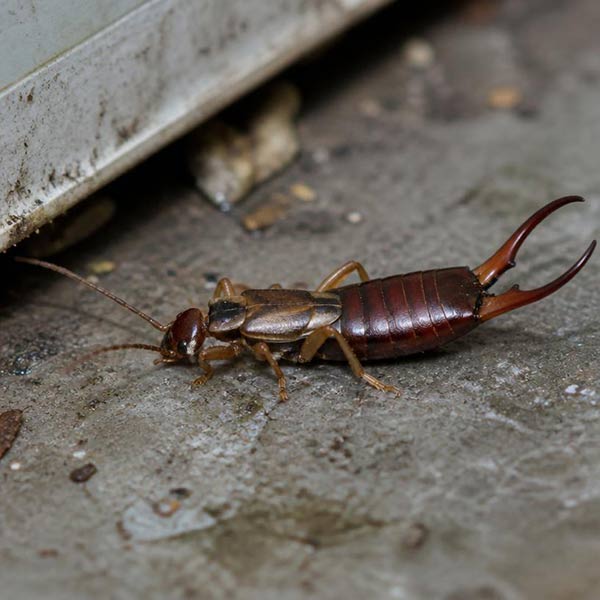
If you’ve flipped on a bathroom light and seen a flat, reddish-brown insect with a pair of pincers on its tail end scurry for the baseboard, that’s an earwig. Most people call them pincher bugs. Here’s what causes earwigs, why you’re suddenly seeing them, and how to get rid of earwigs for good.
What Earwigs Look Like (and What They Don’t Do)
An adult earwig is about 12–19 mm long, flattened, glossy reddish-brown, with thread-like antennae and the unmistakable curved pincers (called forceps) at the rear. Males have thick, curved pincers; females have straighter ones.
Two myths worth killing right away:
- They do not crawl into your ears or lay eggs in your brain. That’s folklore from the old name “ear-wig.” It doesn’t happen.
- They are not venomous. Earwigs can deliver a pinch if you pick one up, and it may sting slightly or leave a faint red mark, but there’s no venom and no disease transmission.
So are earwigs dangerous? Not to people or pets. They are a nuisance in volume, and they will chew ragged holes in garden plants, seedlings, dahlias, hostas and soft fruit.
What Causes Earwigs in the House?
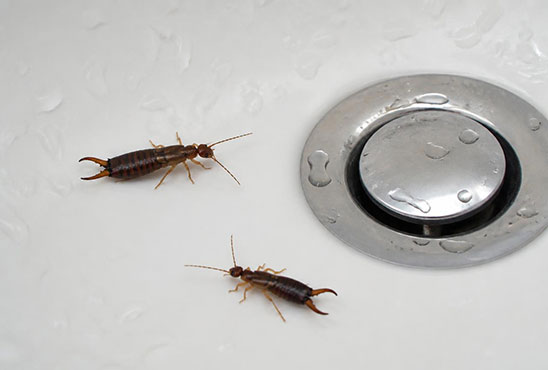
Earwigs are outdoor insects that end up indoors by accident or by pressure. They need moisture to survive — they dry out and die fast in a dry environment. That’s why you find them in the exact same places you’d find silverfish and house centipedes:
- Bathrooms — sinks, tubs, behind the toilet base
- Earwigs in basements — floor drains, sump pump pits, along the base of poured walls
- Laundry rooms and under kitchen sinks
- Garages and cold cellars
- Inside sliding-door tracks and window wells
The triggers that push them in:
- Heavy rain or over-watering floods their outdoor harbourage, and they move to higher, drier ground — your foundation, then inside.
- A dry spell does the same thing in reverse: outdoor soil dries out and they hunt for the humidity coming from your basement or bathroom.
- Mulch, leaf litter and ground cover pressed right up against the foundation gives them a staging area inches from your wall.
- Gaps — worn door sweeps, unsealed sill plates, torn window screens, utility penetrations, and unscreened weeping tile or dryer vents.
- Exterior lighting. Earwigs are drawn to light at night, which concentrates them at doors and windows.

Do Earwigs Fly? And Do They Multiply Indoors?
Most species have functional hind wings folded under short wing covers, and some can fly short distances — but you’ll rarely see it. They travel by walking, and fast.
The good news: earwigs don’t establish breeding populations inside the way cockroaches or bed bugs do. The female lays 30–60 eggs in a nest chamber in soil, then guards them — an unusual bit of insect parenting. That nest is outdoors. So indoor earwigs are almost always migrants from the perimeter, which is exactly why perimeter work is the fix.
How to Get Rid of Earwigs: What You Can Do Yourself
If you’re seeing one or two a week, start here:
Cut the moisture.
- Run a dehumidifier in the basement; target 45–50% relative humidity.
- Fix dripping taps and sweating pipes.
- Extend downspouts at least 1.2 m (4 ft) away from the foundation.
- Pull mulch, soil and dense ground cover back 15–30 cm (6–12 in) from the wall, and rake out damp leaf litter.
Close the doors.
- Replace worn door sweeps and weatherstripping.
- Caulk gaps around hose bibs, dryer vents, AC lines and cable entries.
- Repair window screens and clean out window wells.
Reduce the outdoor pressure.
- Store firewood off the ground and away from the house.
- Switch exterior fixtures to warm/yellow LED bulbs, which attract far fewer insects.
- A shallow dish of vegetable oil or a rolled damp newspaper left out overnight works as a simple earwig trap in garden beds — check and dump it each morning.
Indoors: vacuum them up. Don’t crush them; earwigs release a noticeable foul odour when squashed.
Where DIY stalls: store-bought sprays kill the earwigs you hit and nothing else. The population lives outside in soil, mulch and voids you can’t reach with a trigger bottle, so within a week or two you’re back to sweeping them out of the tub. If you’re finding them daily, in multiple rooms, or in the dozens, that’s an earwig infestation and it needs the perimeter treated properly.
Professional Earwig Pest Control: What We Actually Do
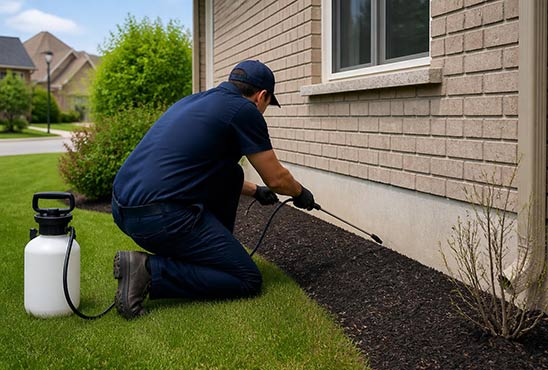
Swift-X treats earwigs from the outside in, because that’s where they live:
- Inspection. We identify the harbourage — mulch beds, window wells, downspout splash zones, retaining walls, dense ground cover — and find the entry points they’re using.
- Perimeter barrier treatment. A residual application to the foundation, mulch and ground cover band, door thresholds, window frames and utility penetrations. This is the step that stops the migration.
- Targeted granular application in mulch, garden beds and along walkways where earwigs shelter and feed during the day.
- Interior crack-and-crevice work where needed — baseboards, under sinks, floor drain surrounds, sump areas.
- Exclusion and moisture recommendations so the pressure doesn’t rebuild next season.
- Follow-up. Earwig numbers spike after rain, so we check back and re-treat as needed.
Most homes need one exterior treatment plus a follow-up. We offer next-day service across Toronto, the GTA, Barrie and Simcoe County, and our technicians arrive in unmarked vehicles and plain uniforms — your neighbours don’t need to know.
Frequently Asked Questions
How do I get rid of earwigs in the house fast? Vacuum the ones you see, dry out the room with a dehumidifier and fans, and seal the door sweep or gap they’re coming through. That handles today. A perimeter treatment is what stops next week’s batch.
What smell or spray keeps earwigs away? Homeowners try cedar, peppermint and diatomaceous earth. These can deter earwigs in a narrow, dry band, but they lose effect the moment they get wet — which is exactly the condition earwigs prefer. Treat them as a supplement, not a solution.
Do earwigs bite? They pinch rather than bite. It can startle you and occasionally break skin, but there’s no venom and no infection risk beyond any minor scrape.
Are earwigs in bed a concern? It’s uncommon and it’s incidental — they’re not feeding on you and they don’t nest in mattresses. If you’re finding insects in your bed regularly, get it identified; the concern would be bed bugs, not earwigs.
Will earwigs go away on their own? Indoor earwigs die off quickly without moisture, and outdoor numbers drop after the first hard frost. But if the conditions around your foundation stay the same, they come back with the next wet spring.
How much does earwig pest control cost in Toronto? It depends on the size of the property and the perimeter. Call or text us and we’ll give you a straight number over the phone.
Seeing Earwigs Every Day? Let’s Fix the Source
You don’t have a bug-in-the-bathroom problem — you have a moisture-and-perimeter problem, and earwigs are the symptom. Swift-X Pest Control treats the outside harbourage so they stop coming in.
Call or text Swift-X Pest Control for next-day earwig treatment in Toronto, the GTA and Barrie. Discreet vehicles, licensed technicians, and a follow-up visit included.
Related reading:
House Centipedes in Your Home? Why They’re There and How to Get Rid of Them