

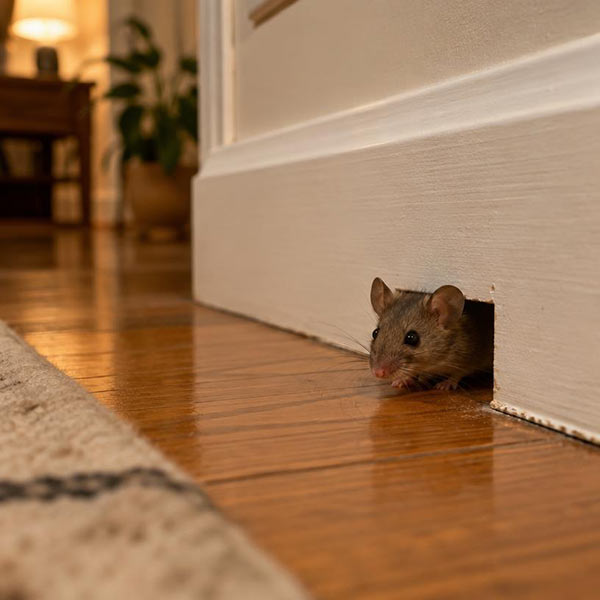
It’s 2 a.m., the house is quiet, and you hear it: a faint scratching, scurrying or gnawing inside the wall. If you live in Toronto or the GTA, there’s a good chance you’ve got mice in your walls — and October is exactly when it happens. As temperatures drop, house mice move indoors looking for warmth, food and a safe place to nest, and wall voids give them all three.
Here’s how to confirm it’s mice, how they’re getting in, and how to get them out for good.
Why mice move into walls in the fall
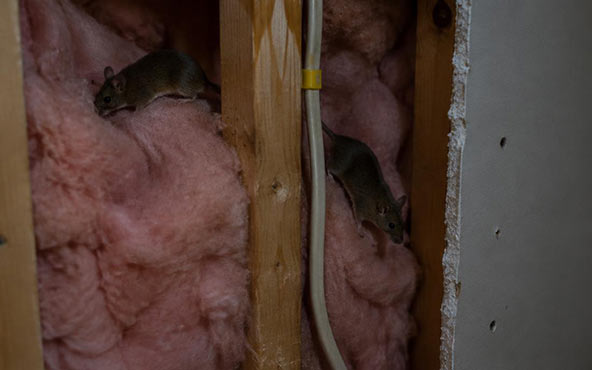
Mice don’t hibernate. When nights start dipping toward freezing in late September and October, they follow warm air leaking out of homes and find their way inside. Wall cavities are ideal: insulated, dark, protected from predators, and connected to everything — kitchens, basements, attics and ceilings.
Once inside, a mouse needs only a few metres of space to live. A single pair can produce 5 to 10 litters a year, with 5–6 pups each, so a couple of mice in October can become a real infestation by mid-winter.
Signs of mice in walls
1. Scratching in walls at night. The most common call we get. Mice are nocturnal, so sounds peak between dusk and dawn. Listen for light scratching, quick scurrying, squeaking, or a rhythmic gnawing sound.
2. Sounds that move. Mouse in wall sounds tend to travel — up toward the ceiling, along a floor joist, or behind kitchen cabinets. Sounds that stay in one spot all night may point to a nest.
3. Droppings near walls. Look along baseboards, under sinks, behind the stove and fridge, and inside lower cabinets. Not sure what you’re looking at? Our guide to mouse droppings vs rat droppings shows how to tell them apart by size, shape and colour.
4. Gnaw marks and small holes. Mice chew constantly. Watch for holes the size of a dime near baseboards, chewed wiring, or wood shavings at the base of walls.
5. Grease marks and a musky smell. Mice follow the same routes along walls, leaving faint dark smudges. A stale, ammonia-like odour often means urine buildup inside a wall void.
6. Pets staring at the wall. Cats and dogs hear rodents long before you do. If your pet keeps fixating on one spot, take it seriously.
Is it mice, rats or something else?
- Mice: light, quick scratching and scurrying; mostly at night; droppings 3–6 mm with pointed ends.
- Rats: heavier thumping, louder gnawing; droppings 12–18 mm and blunt.
- Squirrels: active in the daytime, especially early morning and late afternoon, usually in the attic.
- Insects: carpenter ants can make a faint rustling sound, but you’ll usually see frass (sawdust).
If the noise happens mostly at night and sounds light and fast, it’s almost always mice.
How do mice get in the house?
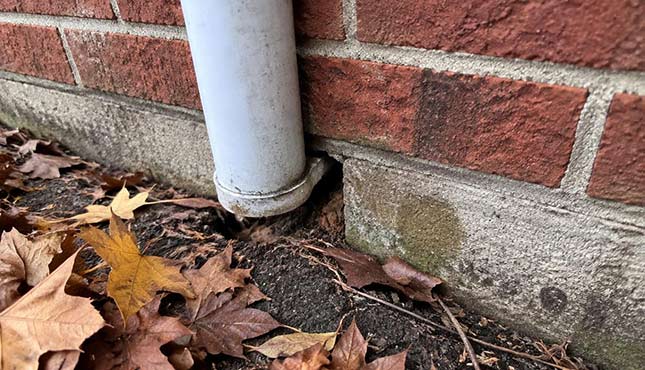
A mouse can squeeze through a gap the size of a dime — about 6 mm. If its head fits, the body follows. The most common entry points we find in Toronto homes, semis and condos:
- Gaps around pipes, gas lines and cables entering the foundation
- Dryer vents and exhaust vents without proper covers
- Cracks in foundations and gaps under siding or brick
- Gaps under garage doors and worn door sweeps
- Weep holes in brick
- Roof lines, soffits and gaps around chimneys (the route into the attic and ceilings)
- In condos and apartments: shared walls, plumbing chases and gaps behind appliances
Mice in attic and ceilings
Mice climb surprisingly well. They run up inside wall cavities and nest in attic insulation, which is why many homeowners hear sounds in the ceiling above bedrooms. Signs in the attic include flattened or tunnelled insulation, droppings along joists, and shredded paper or fabric used for nesting.
Can mice chew through walls?
Yes. Mice easily chew through drywall, wood, plastic, foam insulation and even soft caulking. They won’t get through steel wool, sheet metal or hardware cloth — which is why proper sealing materials matter.
How to get rid of mice in walls
1. Don’t seal them in. Closing up holes while mice are still inside traps them in the wall, where they’ll chew new exits or die and cause odour problems. Remove the mice first, then seal.
2. Place traps along runways — not inside the wall. Set snap traps or enclosed traps along the baseboards where you see droppings or hear activity, perpendicular to the wall, with the trigger end touching it.
3. Remove food and water sources. Store pantry food in sealed containers, clean crumbs under appliances, fix leaky pipes, and don’t leave pet food out overnight.
4. Avoid poisons inside walls. Poisoned mice often die inside the wall void, creating a strong smell that can last weeks.
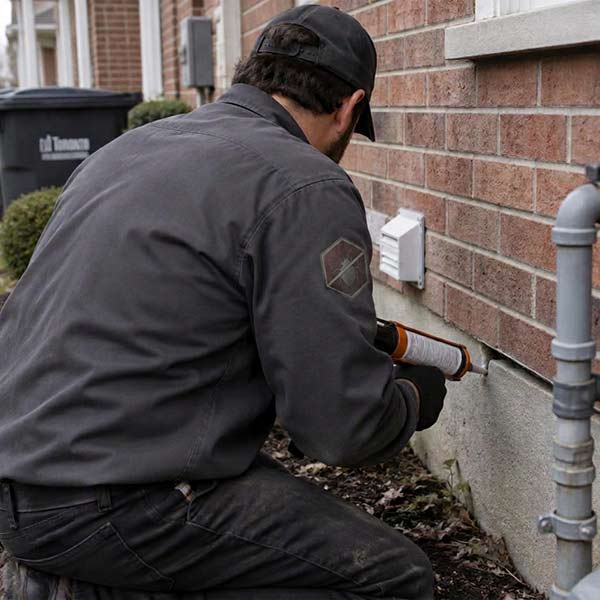
5. Seal every entry point. Once activity stops, close every gap with steel wool, copper mesh, sheet metal or hardware cloth, finished with sealant. Our step-by-step guide to sealing mouse entry points walks through the most common gaps.
When to call a professional
DIY traps can catch a mouse or two, but walls hide a lot. Call a pro if:
- You hear activity in more than one room or floor
- Sounds continue after a week of trapping
- You find fresh droppings in the kitchen
- You can’t find how they’re getting in
- You live in a condo, townhouse or semi where mice travel between units
Swift-X provides discreet, professional rodent removal in Toronto and the GTA: a full inspection, targeted treatment, and entry-point sealing so mice don’t come back next fall.
Hearing scratching in your walls? Call or Text Swift-X Pest Control today for fast, discreet service.
FAQ
What does a mouse in the wall sound like? Light scratching, scurrying, squeaking or gnawing, usually at night. Sounds often move along the wall or up toward the ceiling.
Will mice in walls go away on their own? Rarely. Once they find warmth, food and nesting material, mice stay and breed. Activity usually grows through the winter.
How do I get rid of mice in my walls without opening the wall? Trap along the runways where mice exit the wall, remove food sources, then seal entry points once activity stops. Professionals can also treat wall voids directly.
Can mice climb inside walls? Yes. Mice climb wall studs, wiring and pipes easily, which is how they reach ceilings and attics.
How small a hole can a mouse fit through? About 6 mm — the size of a dime.
Why do I only hear mice at night? Mice are nocturnal and most active from dusk to dawn, when your home is quiet.