

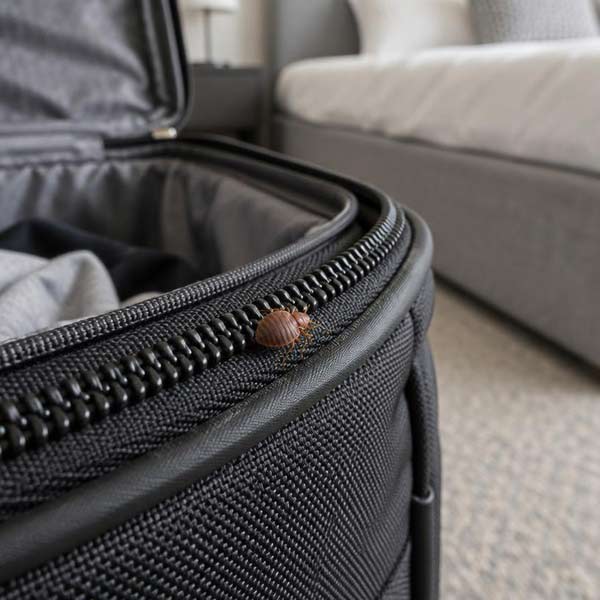
You unpack after a trip, put down your work bag, or bring home a second-hand item—and spot one small, reddish-brown insect. If it is a bed bug, does that mean your home is already infested?
Not necessarily. But one bed bug deserves attention: an already-mated female can start an infestation, and finding only one does not prove that only one arrived. A lone male cannot reproduce by himself, but he can still feed on you.
Here is how to assess the risk without assuming the worst—or dismissing a warning sign.
Where do bed bugs come from if you find only one?
Bed bugs can hitchhike in luggage, clothing, bags and second-hand furniture. In apartments and other multi-unit buildings, they can also move between units. Finding one does not tell you which route it took or when it arrived, so review recent exposures without assuming a particular person or place caused the problem. Bed bugs are not a sign that a home is dirty.
Can one bed bug cause an infestation?
Yes, one previously mated female can potentially establish a new population. Female bed bugs store sperm after mating, so a male does not need to travel with her for her to lay fertile eggs. Research has demonstrated egg production through multiple feeding cycles after a single mating.
That does not mean every female hitchhiker will establish an infestation. Survival, access to blood meals, viable eggs and successful development all matter. There is no reliable percentage that tells you the odds from one bug found in your home.
| What arrived? | Can it bite? | Can it start a reproducing population alone? |
|---|---|---|
| Adult male | Yes | No—not without a female |
| Genuinely unmated adult female | Yes | No viable offspring without mating |
| Previously mated adult female | Yes | Potentially yes, using stored sperm |
| Single nymph, or immature bed bug | Yes | Not by itself; it must mature and mate to reproduce |
Why a lone female can arrive already able to lay eggs: bed bugs don’t mate the way most insects do. The male pierces the female’s abdomen and deposits sperm directly into her body cavity — a process called traumatic insemination — and she stores it to fertilize eggs over later feeding cycles.
The catch is knowing whether it truly was the only insect. Another bed bug—or eggs—could be hidden in the same bag or item. Even a correctly identified male is a reason to inspect the surroundings, not an automatic all-clear.
What do bed bugs look like?
Adult common bed bugs are wingless, flattened, oval insects, usually brown before feeding and more reddish-brown after a blood meal. How big are bed bugs? Adults are usually about 5–7 mm long, roughly apple-seed sized. Young bed bugs, called nymphs, are smaller and paler and can be difficult to see.
Before deciding whether you found a male or female, confirm that the insect is actually a bed bug. Colour and size alone are not enough.
Male vs female bed bugs: how can you tell?
Two visible clues can help distinguish adults:
- Adult male: the abdomen is longer and narrower, tapering toward a more pointed tip.
- Adult female: the abdomen is shorter, rounder and wider, ending in a more rounded, blunter tip.
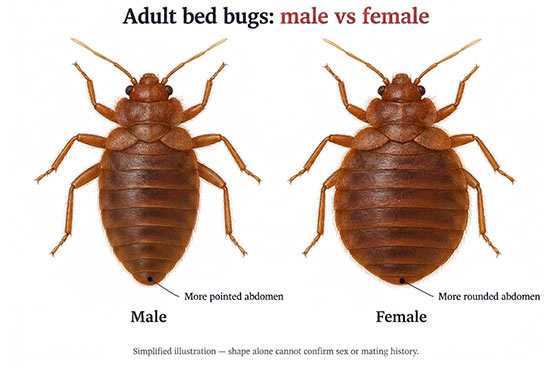
Do not rely on colour, apparent size or overall roundness alone. After feeding, bed bugs become darker and their abdomens elongate. A blurry photograph, damaged specimen or awkward angle can obscure the difference.
Small nymphs are harder for a homeowner to assess; the adult shortcut should not be applied confidently to every tiny insect. Most importantly, a photograph cannot tell you whether a female carries viable stored sperm.
Preserve the specimen and arrange identification rather than choosing a treatment based on a male-or-female guess. Carpet beetles, ticks and other insects can also be mistaken for bed bugs.
Bed bug bites: can one bed bug keep biting you?
Yes. Males, females and nymphs all take blood meals. A male is not harmless just because he cannot lay eggs.
With a host available, bed bugs commonly feed about every 3–7 days, depending on conditions—not necessarily every night. One bug can therefore feed repeatedly over time. It may also probe more than once during a feeding attempt.
The number of bumps is not the number of bugs. A line of three bumps does not prove three insects, and one bump does not rule bed bugs out. Some people show little or no reaction; others develop marks after a delay.
Bumps noticed after returning from a trip may reflect bites acquired elsewhere, rather than feeding in your bedroom. Skin reactions alone cannot confirm where or when an exposure happened.
If you have itchy marks but no confirmed insect, read our mystery bites but no signs of bed bugs guide. Keep looking for physical evidence, and consider medical advice for persistent unexplained skin symptoms. Seek urgent care for a severe allergic reaction.
How long can a single bed bug live?
There are two different questions: its lifespan with feeding, and survival without food.
With access to blood meals
CDC describes adult lifespan as approximately 6–12 months, although actual survival varies with temperature, strain and conditions. An individual that keeps finding a host may remain a problem for months—not simply disappear after a few nights.
Without a blood meal
Bed bugs can survive several months without feeding. In a controlled study at approximately 26°C, mean adult survival without food varied across strains from roughly 43 to 99 days. Those were study averages, not guaranteed maximums; cooler conditions can prolong survival.
Leaving a room empty for a week, sleeping somewhere else or keeping luggage closed for a few days is not a reliable way to eliminate them. Do not treat any survival estimate as a countdown to safety.
If it is a mated female, how quickly could eggs hatch?
Under favourable conditions, eggs often hatch in roughly one to two weeks, although published ranges vary with conditions. Health Canada gives a range of 6–17 days.
Newly hatched nymphs need blood meals to pass through five growth stages before adulthood. Population growth takes time, but an early infestation can be hard to detect while it develops.
This is why waiting for dozens of visible bugs is a poor strategy. Equally, finding a suspected female does not prove eggs have already been laid. Inspect and monitor rather than assuming either outcome.
How to get rid of bed bugs: first steps after finding one
Start with identification, containment and inspection—not an automatic whole-home spray. Removing the single insect you found does not establish that any hidden bugs or eggs are gone. If more evidence appears, an inspection should guide a complete treatment plan.
1. Capture it and record where it was found
Place the insect in a sealed clear container if possible. Photograph it clearly beside a ruler, and note the date, exact location and recent travel or second-hand purchases. Avoid crushing the specimen beyond recognition.
2. Contain the suspected item
Keep luggage or clothing away from beds and upholstered furniture. Seal washable items in bags before moving them to laundry. Use a high-heat dryer cycle where the fabric permits; EPA recommends high heat for 30 minutes for suitable clothing and bedding, noting that washing alone may not be enough. Transfer treated items into clean bags or containers.
Do not assume the same method is appropriate for electronics, shoes or delicate belongings. Ask about safe options for those items.
3. How to check for bed bugs and early signs
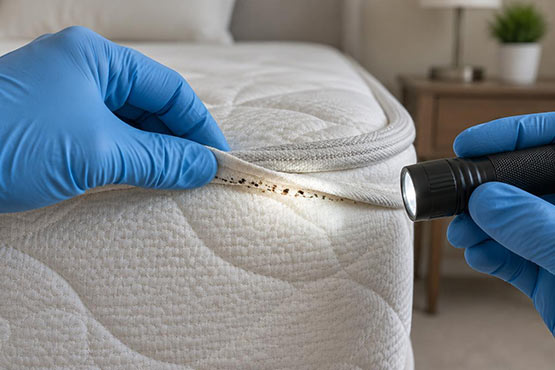
Use a flashlight to check mattress piping and labels, box-spring edges, bed-frame joints, the headboard and nearby furniture cracks. Inspect the bag or item where the insect was found too.
Look for these early signs of bed bugs:
- Live adults or smaller, pale nymphs.
- Tiny pale eggs or empty eggshells.
- Shed skins left behind as nymphs grow.
- Dark fecal spots on seams or nearby surfaces.
- Rusty or reddish stains on sheets or mattresses.
Stains alone are not confirmation, and an early infestation may leave little visible evidence. If you are unsure, preserve the insect and seek identification before deciding on treatment. Our how to check for bed bugs guide(opens in a new tab) explains the inspection locations in more detail.
4. Monitor rather than repeatedly spraying
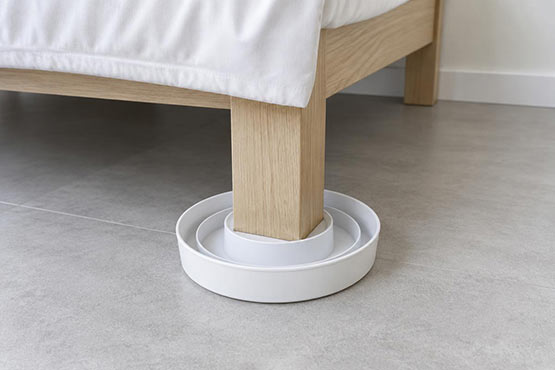
Where suitable, use purpose-built bed bug interceptors beneath bed legs, following their instructions. Keep bedding off the floor and check monitors regularly. Interceptors help detect activity; an empty trap does not prove absence.
Avoid foggers, rubbing alcohol and indiscriminate spraying. Do not move potentially infested belongings through the home or change sleeping locations as a control tactic; that can spread activity. Renters should report confirmed or suspected activity to the landlord or property manager promptly so inspection can be coordinated.
When is paying for a professional inspection worth it?
A confirmed bed bug is a strong reason to arrange a prompt inspection, even if you found only one. Do not delay while trying to determine its sex.
An inspection is also worth considering when:
- You find a suspicious insect you cannot identify confidently.
- Eggs, shed skins or suspicious spotting accompany a credible exposure.
- New concerns continue despite a careful check and monitoring.
- The possible source is upholstered furniture, or hiding places are difficult to access.
- You live in a multi-unit building where coordinated assessment may be needed.
With bumps alone and no physical evidence, start by assessing both pest and non-pest causes. EPA cautions that skin bites are a poor indicator of infestation. An inspection may help investigate, but a rash alone should not trigger a diagnosis or pesticide treatment.
Before paying, ask what areas will be checked, whether specimen identification is included, and what monitoring or follow-up is recommended if the inspection is inconclusive. No honest inspection can guarantee that a tiny hidden population is absent after one visit.
For help in Toronto and the GTA, Call or Text Swift-X to discuss what you found and our bed bug assessment and treatment service(opens in a new tab). Inspection should guide any treatment decision—not the assumption that one suspicious bug requires whole-home treatment.
Frequently asked questions
Does finding one bed bug mean there are more?
Not necessarily. It could be an isolated hitchhiker, but finding one does not prove it is the only one. Preserve the specimen, inspect likely hiding places and monitor.
Can a single female bed bug reproduce without a male nearby?
A previously mated female can lay fertile eggs using stored sperm. A genuinely unmated female cannot independently produce viable offspring. Appearance does not reveal mating history.
Do male bed bugs bite?
Yes. Adult males, adult females and nymphs all feed on blood. A lone male cannot reproduce by himself, but it can continue feeding.
Can one bed bug bite more than once?
Yes. One insect can take repeated blood meals over time and may probe more than once during feeding. Bite counts and patterns cannot establish how many bugs are present.
How long can a bed bug survive without food?
Several months is possible, depending on temperature, life stage and strain. A few days or weeks without a host does not reliably eliminate bed bugs.
Should I book an inspection after finding one bed bug?
A confirmed specimen warrants prompt inspection. For bumps alone, investigate other causes too. One negative inspection may need monitoring or follow-up and is not a guaranteed all-clear.
Further reading
- Health Canada, bed bug biology: https://www.canada.ca/en/health-canada/services/pest-control-tips/bedbugs-what-are-they.html(opens in a new tab)
- US EPA, how to find bed bugs: https://www.epa.gov/bedbugs/how-find-bed-bugs(opens in a new tab)
- US CDC, about bed bugs: https://www.cdc.gov/bed-bugs/about/(opens in a new tab)
- University of Tennessee, bed bug biology and identification: https://bedbugs.tennessee.edu/biology-and-identification/(opens in a new tab)