

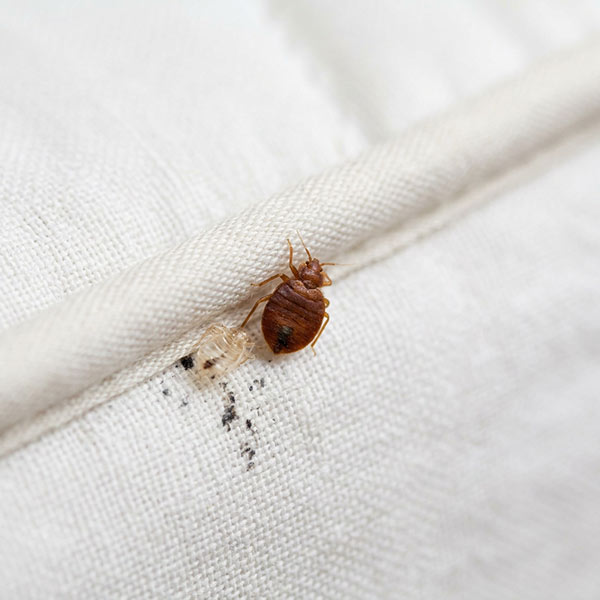
Waking up with unexplained bites — or spotting a small reddish-brown bug on your sheets — sends most people straight to Google with the same question: how do I check for bed bugs? The good news is that a careful 15-minute inspection can tell you a lot. Bed bugs are skilled hiders, but they leave behind reliable evidence, and once you know the early signs of bed bugs, you’ll know exactly where to look.
Before reading further, if you are in Toronto, the GTA, or Barrie and surrounding regions, and feel you need immediate assistance in discussing your current situation of possible bed bugs, please feel free to call or text us at Swift-X Pest Control. A licensed professional exterminator will be happy to help.
This guide walks you through the same inspection process our licensed technicians use in Toronto homes — mattress, box spring, couch, furniture, clothing, and even hotel rooms — so you can confirm (or rule out) a problem before it grows.
What Do Bed Bugs Look Like?
Before you check, know your target. Adult bed bugs are:
- About the size and shape of an apple seed (4–5 mm)
- Flat, oval, and wingless — bed bugs cannot fly or jump
- Reddish-brown; swollen and darker red after feeding
- Visible to the naked eye, though they avoid light
Young bed bugs (nymphs) are smaller and pale yellow-white, which makes them harder to spot until they’ve fed. Bed bug eggs are about 1 mm, pearly white, and often stuck in clusters inside fabric seams and cracks.
Early Signs of Bed Bugs (What to Look For)
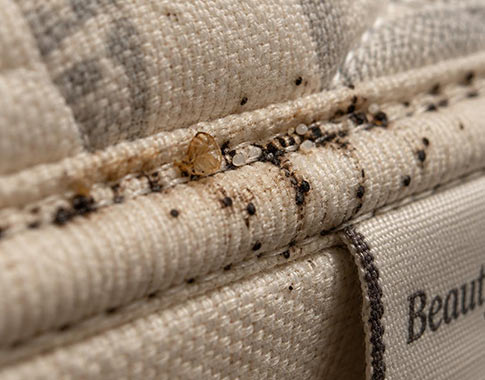
You often find the evidence before you find a live bug. During your inspection, watch for:
- Black fecal spots — tiny dark dots, like a felt-tip pen touched the fabric. They smear when wiped with a damp cloth.
- Shed skins — translucent, pale, bug-shaped shells left behind as nymphs grow.
- Eggs and eggshells — pearly white, about the size of a pinhead, glued into seams.
- Rusty or reddish stains — crushed bugs or blood spots on sheets and pillowcases.
- Live bugs — along piping, seams, and tags, especially at night.
- A sweet, musty odour — noticeable only in heavier infestations.
How to Check Your Bed and Mattress for Bed Bugs
This is ground zero — roughly 70% of bed bugs in an infested room are found in or around the bed. Here’s how to check a mattress for bed bugs, step by step:
- Strip the bedding and inspect sheets and pillowcases for black spots or rust-coloured stains. Place bedding straight into a sealed bag if you suspect activity — don’t carry it through the house.
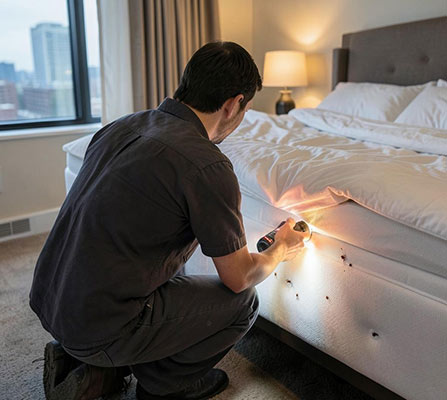
- Check the mattress seams and piping. Run a credit card or stiff piece of paper along every seam, fold, tuft, and button. Pay close attention to corners.
- Inspect the mattress tag — a classic hiding spot.
- Flip the mattress and check the underside, especially the fabric dust cover edges.
- Check the box spring. This is the single most common hiding place. Inspect the corners, the staples, and peel back the dust cover if you can.
- Examine the bed frame and headboard — every joint, screw hole, and crack. Headboards (especially upholstered ones) pulled away from the wall often reveal activity.
Flashlight trick: A bright flashlight held at a low angle makes pale nymphs and eggs cast tiny shadows, dramatically easier to see. Your phone light works in a pinch.
Hair dryer trick: Bed bugs hate heat. Running a hair dryer on high over a suspect seam for 30–60 seconds can flush hiding bugs out into the open — a useful way to confirm activity.
How to Check a Couch, Chairs and Other Furniture
Bed bugs spread beyond the bed, especially anywhere people sit or nap for long periods. To check a couch for bed bugs:
- Remove all cushions and inspect the seams, zippers, and piping
- Check the creases where the back and arms meet the seat
- Tip the couch back and inspect the underside, dust cover, and frame joints
- Repeat for recliners, office chairs, and upholstered dining chairs
Also check nearby furniture: nightstands, dressers (inside and behind drawers), curtain folds, behind picture frames, and along baseboards and carpet edges near the bed.
How to Check Clothes for Bed Bugs
Bed bugs don’t live on clothing the way lice do, but they hitchhike in it. To check clothes for bed bugs, focus on items stored near the bed or recently travelled with: shake them out over a white sheet or bathtub, inspect seams, pockets, and cuffs, and look for the same black spotting. Anything suspect goes straight into a hot dryer for 30+ minutes — heat kills all life stages, including eggs.
How to Check a Hotel Room for Bed Bugs
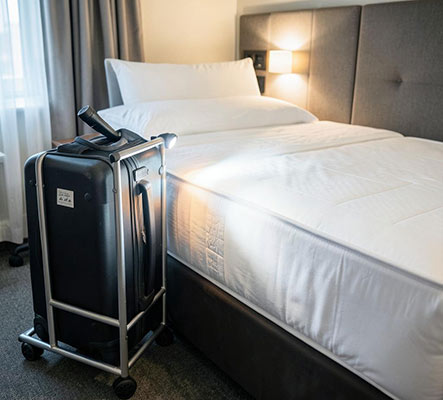
Travel is the number one way bed bugs spread into Toronto homes. A two-minute hotel check can save you months of grief:
- Don’t unpack. Leave your luggage on the metal luggage rack (inspect the straps first), on a hard surface, or in the bathtub — never on the bed or floor.
- Pull back the sheets at the head of the bed and check the mattress seams and piping with your phone flashlight.
- Check behind and around the headboard if it moves.
- Inspect the upholstered chair and luggage bench seams.
- Found signs? Photograph them, ask for a room far away (not adjacent), or change hotels.
When you get home: unpack in the garage or over a hard floor, dry all clothing on high heat for 30 minutes, and vacuum your suitcase before storing it.
What If You Find Bed Bugs?
If your inspection turns up live bugs, eggs, or fecal spotting:
- Don’t panic and don’t start spraying. Over-the-counter bed bug sprays rarely reach hidden bugs and eggs, and often scatter the infestation into walls and neighbouring rooms — making professional treatment harder.
- Don’t move infested furniture through the home (and don’t throw a mattress out without wrapping it — you’ll spread bugs through the building).
- Do start isolating: bedding and clothing into sealed bags, then hot dryer cycles.
- Call a licensed exterminator promptly. Bed bugs reproduce quickly — a single fertilized female can lead to thousands of descendants within months. Early treatment is faster, cheaper, and far more discreet.
Heat treatment is the gold standard in Toronto: it kills bed bugs and their eggs in a single visit, works even in cluttered homes, and requires far less preparation than chemical-only programs. (Curious what it runs? See our guide to bed bug heat treatment costs in Toronto.)
Not Sure What You’re Looking At? We’ll Check For You.
Many of our bed bug calls start with a homeowner who thought they saw something but couldn’t be sure. Swift-X Pest Control provides professional bed bug inspections across Toronto — discreet, thorough, and honest. If we find nothing, we’ll tell you. If we find early activity, we’ll give you a clear flat-rate quote and can usually treat the same or next day. If you are not finding anything, read up on our information about “mystery bites”.
Call or text (647) 478-2128 — describe what you found, or send us a photo, and we’ll tell you what you’re dealing with.
Frequently Asked Questions
Can you see bed bugs with the naked eye?
Yes. Adult bed bugs are about the size of an apple seed (4–5 mm) and reddish-brown, so they’re visible without magnification. Nymphs and eggs are much smaller and paler, which is why a flashlight helps.
Where do bed bugs hide during the day?
They stay within about 2 metres of where people sleep or rest: mattress seams, box springs, bed frames, headboards, nightstands, couch cushions, baseboards, and even behind picture frames and electrical outlets in heavier infestations.
I have bites but can’t find any bugs. Do I have bed bugs?
Not necessarily — and bites alone can’t confirm bed bugs, since reactions vary widely and other pests (fleas, mosquitoes, carpet beetles) cause similar marks. Physical evidence — fecal spots, shed skins, eggs, or live bugs — is the only reliable confirmation. If you have bites but no evidence after a careful check, a professional inspection is the fastest way to get an answer.
How do I check for bed bugs with a flashlight?
Hold a bright flashlight at a low, flat angle across mattress seams, tags, and furniture creases. The raking light makes tiny pale nymphs, eggs, and shed skins cast shadows so they stand out. Work slowly, seam by seam.
Does a hair dryer really reveal bed bugs?
Yes — sustained heat from a hair dryer (30–60 seconds over a seam or crack) can drive hiding bed bugs out into the open. It’s a confirmation trick, not a treatment: household hair dryers don’t get hot enough, long enough, to kill an infestation.
How fast do bed bugs spread if I found one?
A single fertilized female lays 1–5 eggs per day, and eggs hatch in about 6–10 days in warm conditions. Left alone, a small introduction can become a building-wide problem in a few months — which is why acting on the first confirmed sign matters.
Related Reading:
What Do Bed Bug Bites Look Like — And How to Check Your Bed for Bed Bugs (Toronto Guide)
Top Reasons to KEEP Sleeping in a Bed Bug Infested Bed
Bed Bug Heat Treatment Cost in Toronto
Mystery Bites but No Bed Bugs? Here’s What It Could Be