


You’re waking up with itchy red bumps. Your first thought: bed bugs. So you strip the sheets, check the mattress seams, flip the pillows – and find nothing. No bugs, no black spots, no blood stains. Now what?
This is one of the most common calls we get at Swift-X Pest Control. Someone has “mystery bites,” the bed looks clean, and they’re left wondering what’s actually biting them – or whether anything is biting them at all. The good news: there’s a logical way to narrow it down. Here’s how we walk customers through it.
First: Don’t Rule Out Bed Bugs Just Yet
A clean-looking mattress does not mean bed bugs are off the table. Early infestations are incredibly easy to miss – a few bugs can hide inside a box spring, behind a headboard, or in a nightstand crack for weeks before leaving obvious evidence.
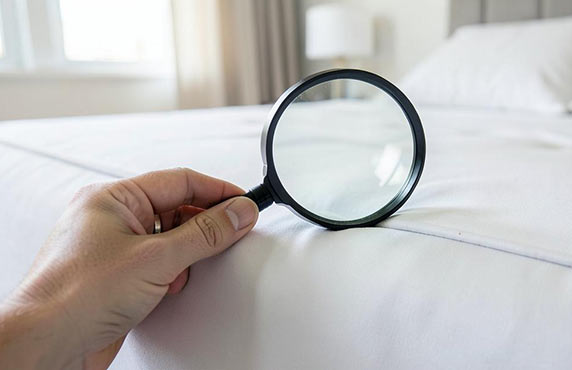
Bed bugs are still a strong possibility if:
- Bites appear overnight, on skin that was exposed while sleeping (arms, shoulders, neck, back)
- Bites follow a line or cluster pattern — sometimes called the “breakfast, lunch and dinner” pattern
- Bites showed up after travel, used furniture, or visitors staying over
- Only some people in the home are reacting — roughly 30% of people don’t react to bed bug bites at all, so a partner with no bites doesn’t clear the room
If you’ve done a careful check of the mattress piping, box spring underside, and headboard with a flashlight and found absolutely nothing, bed bugs drop down the list — but keep monitoring for a week or two before crossing them off entirely.
Comparing the Bite Patterns
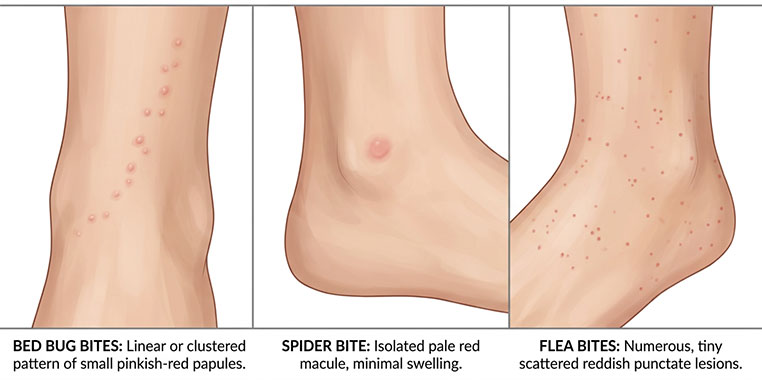
The pattern, location, and timing of the bumps can tell you a lot. Here’s a quick comparison:
- Bed bugs: Small pink-red bumps in lines or tight clusters, usually on skin exposed at night. Very itchy, often appearing 1–3 days after the bite.
- Spiders: Usually a single isolated bump, not multiples. Spiders rarely bite repeatedly — waking up with new bumps every morning is almost never spiders.
- Fleas: Small itchy bumps scattered around the ankles, feet, and lower legs — especially if you have pets or recently moved into a home that had pets.
- Mosquitoes: Puffy welts on exposed skin, appearing within minutes to hours. If you’re getting these indoors in September, a window screen gap or a door left open is the likely culprit.
- Mites (from rodents or birds): Tiny itchy bumps if mice are in the attic or walls, or if birds are nesting on a balcony or in a vent. These often surprise people.
Narrowing Down the Other Variables
Before assuming it’s a bug at all, consider these commonly overlooked causes:
- New products. A new laundry detergent, fabric softener, soap, or body lotion can cause itchy red welts that look exactly like bites — especially where clothing rubs.
- Dry skin season. As Toronto heads into fall, indoor heating kicks on and dry skin flares up. Dry-skin itch clusters can look like bites when scratched.
- Pets. Even indoor cats and dogs can carry fleas in from a balcony, hallway, or elevator. If bites are low on the legs and you have a pet, check the pet first.
- Timing of the bites. Bites that appear overnight point to something in the bedroom. Bites that appear after watching TV point to the couch. Bites after gardening point outdoors.
- Who else is affected. If everyone in the home has bumps, it’s more likely environmental (or a heavy infestation). If only one person reacts, it could simply be that only one person’s skin reacts.
When the Bites Are Real but the Culprit Hides
Two scenarios we see regularly in Toronto homes:
- Mice in the walls or attic can carry mites that wander and bite people, especially in bedrooms below the attic. If you hear scratching at night alongside the bites, mention it — it changes the whole inspection.
- Early-stage bed bugs where the population is still tiny. In these cases we may find nothing on a first visual check but confirm activity with monitors over the following weeks.
If you’re waking up bitten more than once or twice, it’s worth a professional inspection. Trained eyes know the less obvious hiding spots — screw holes in bed frames, inside alarm clocks, behind baseboards — and can tell the difference between bite evidence and look-alikes.
What You Can Do Tonight
- Photograph each new bump with the date — patterns emerge fast
- Wash bedding in hot water and dry on high heat
- Run a flashlight along mattress seams, the box spring underside, and the headboard
- Check your pets and their bedding
- Note anything new: detergent, travel, guests, used furniture
- Avoid scratching — it makes identification harder and can lead to infection
Get Answers, Not Guesses
Mystery bites are frustrating because the wrong guess wastes weeks. At Swift-X, our inspections cover bed bugs, fleas, mites, and rodent activity together — because the culprit isn’t always the obvious one. If you’re in Toronto or the GTA and waking up bitten, call or text us and we’ll help you figure out exactly what’s going on. Discreet, unmarked service — your neighbours won’t know a thing.
Related Reading:
How to Check for Bed Bugs: A Toronto Homeowner’s Inspection Guide