

Cockroach Control in Toronto — Done Right, Done Discreetly
If you’ve spotted a cockroach in your Toronto kitchen, bathroom, or basement, you’re not alone — and you almost certainly aren’t dealing with just one. Cockroaches are the most prolific indoor pest in the GTA. A single female German cockroach can produce up to 300 offspring per year, and by the time you see one in daylight, the colony behind your walls is usually well-established. Check out our other post: Top 6 Questions Homeowners Ask about Cockroaches (Answered).
Swift-X Pest Control has been eliminating cockroach infestations across Toronto, Mississauga, Scarborough, North York, and the wider GTA for over a decade. We arrive in unmarked vehicles, use pet- and child-safe protocols, and back every treatment with a written guarantee.
Call (647) 478-2128 for immediate advice and quote.
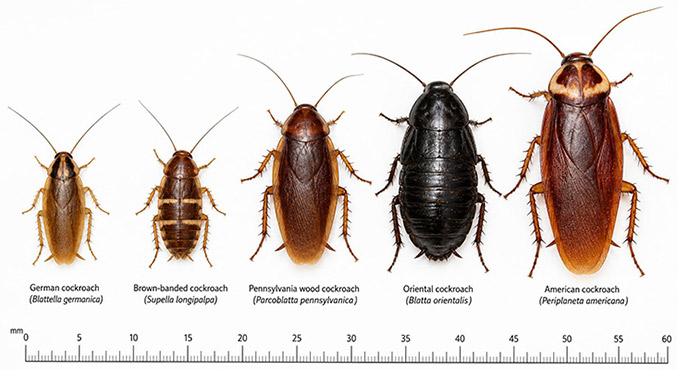
The 5 Cockroach Species You’ll Actually See in Toronto
Not every “roach” is the same — and treatment varies dramatically by species. Here’s what we encounter in GTA homes and businesses:
1. German Cockroach (Blattella germanica) — by far the most common
- Size: 1.3–1.6 cm (small)
- Colour: Light tan to brown, with two dark parallel stripes behind the head
- Where: Kitchens and bathrooms — anywhere warm, humid, and close to food
- Why it matters: Roughly 95% of Toronto residential roach calls are German cockroaches. They reproduce faster than any other species and have developed strong resistance to over-the-counter sprays.
2. Brown-Banded Cockroach (Supella longipalpa)
- Size: 1.0–1.4 cm (small)
- Colour: Tan with two pale yellow bands across the wings and abdomen
- Where: Warmer, drier rooms — bedrooms, living rooms, behind picture frames, inside electronics and appliances
- Why it matters: Often mistaken for German roaches, but their hiding spots are completely different. Treating only the kitchen will not solve a brown-banded infestation.
3. Oriental Cockroach (Blatta orientalis) — the “water bug”
- Size: 2.2–2.7 cm (medium-large)
- Colour: Very dark, shiny brown-black
- Where: Basements, drains, crawl spaces, around floor drains and sump pumps
- Why it matters: Common in older Toronto homes (Cabbagetown, Leslieville, Roncesvalles, The Beaches) with stone or block foundations. They thrive in cool, damp areas and often enter through sewer lines.
4. American Cockroach (Periplaneta americana)
- Size: 3.5–4.5 cm (the giant one)
- Colour: Reddish-brown with a pale figure-8 or “halo” marking behind the head
- Where: Commercial kitchens, restaurants, apartment buildings, basements, steam tunnels — occasionally finding their way into older detached homes
- Why it matters: They can fly short distances and are most common in multi-unit residential buildings and food-service settings across downtown Toronto.
5. Pennsylvania Wood Cockroach (Parcoblatta pensylvanica) — the outdoor wanderer
- Size: 1.5–2.5 cm (males larger than females)
- Colour: Uniform chestnut-brown to dark brown; males have fully developed wings, females have very short wings
- Where: Leaf litter, wood piles, under bark, and around outdoor lights — in Toronto, common in wooded ravine neighbourhoods like Rosedale, High Park, the Beaches, and Leaside
- Why it matters: Wood cockroaches are not true indoor breeders. They wander into homes at night (especially males attracted to porch and kitchen lights), but they usually die indoors without moisture. They can be alarming but rarely require the same intensive treatment as German cockroaches. If you’re seeing them repeatedly, the fix is usually sealing gaps around doors/windows and reducing outdoor lighting near entry points.
How to Tell If You Have a Cockroach Problem
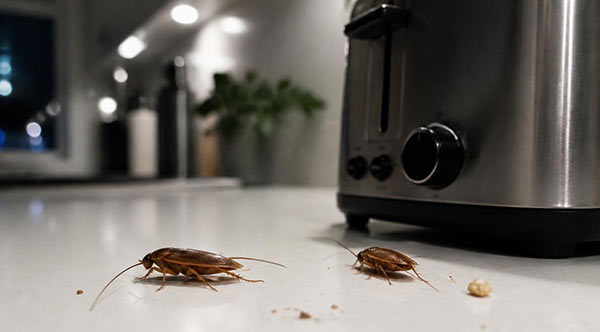
Cockroaches are nocturnal and shy. If you’re seeing them in daylight, the population is large enough that they’ve been pushed out of their hiding spots. Look for these earlier warning signs:
- Droppings: Tiny dark specks resembling ground pepper or coffee grounds (German roaches) or small cylindrical pellets (American/Oriental)
- Smear marks: Dark brown streaks along wall–floor joints and inside cabinets
- Egg cases (oothecae): Small light-brown capsules, 5–10 mm long, tucked into hinges, behind appliances, or under sinks
- Shed skins: Translucent amber-coloured exoskeletons near hiding spots
- A musty, oily odour: Heavy infestations have a distinct sweet-musty smell
- Live sightings during the day: A clear sign the colony is overcrowded
What the spotting actually looks like
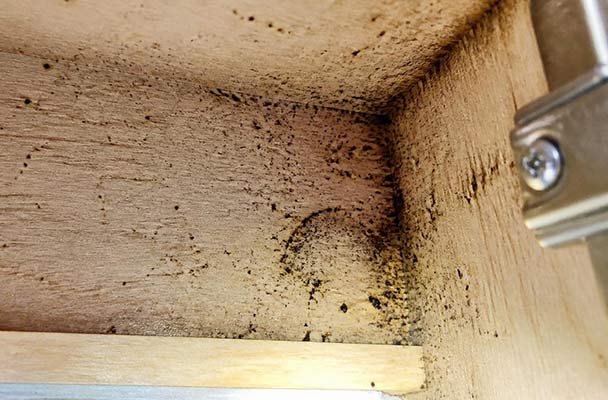
The underside of your kitchen cabinets – especially the raw, unfinished wood near the hinges – is one of the first places we inspect. Cockroaches leave fecal spotting (small dark dots that look painted on) and smear marks where they travel repeatedly. If you see this, you don’t have “one roach.” You have a colony.
Why DIY Sprays Make German Cockroach Problems Worse
This is the single most important thing to understand before treating roaches yourself:
Most over-the-counter sprays and bug bombs cause German cockroaches to scatter — pushing the colony deeper into wall voids, ceilings, and adjacent units. In condos and semi-detached homes, this is how a one-unit problem becomes a building-wide problem.
On top of that, German cockroaches in the GTA have developed strong resistance to pyrethroid sprays (the active ingredient in nearly every grocery-store roach product). University studies have also documented “bait aversion” — entire populations that have evolved to refuse the glucose used in older gel baits.
This is why professional treatment isn’t optional for German cockroaches. The product, placement, and follow-up matter as much as the chemistry.
The Egg Case Problem
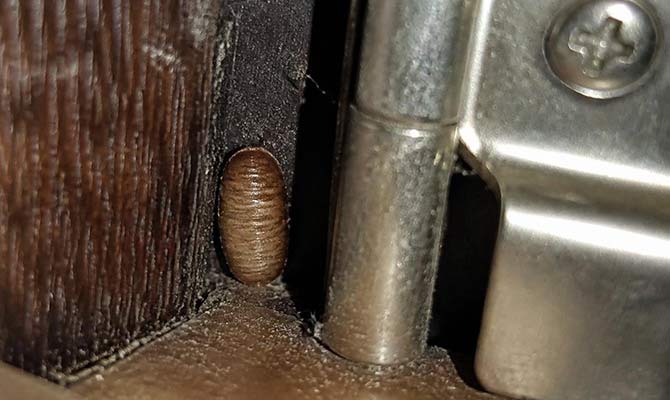
A single German cockroach egg case holds 30–48 eggs and is completely resistant to most insecticides. Female German roaches carry the case until just before it hatches, then tuck it into a tight crevice — behind a hinge, under a fridge motor, inside a dishwasher panel.
That’s why it is critical for any cockroach pest control company to use a long last residual spray application that can remain affective from several weeks to several months — timed to catch nymphs as they hatch but before they can reproduce.
Our Toronto Cockroach Treatment Protocol
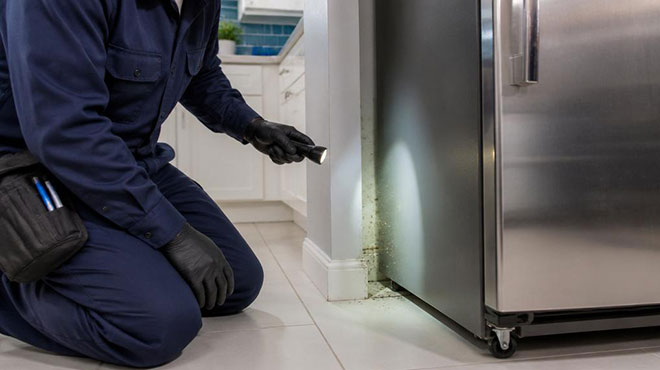
Inspection, ID, Treatment
- Confirm species (German, Oriental, American, Brown-banded, or wood cockroach — treatment can differ slightly for each type)
- Map harbourage points using flashlight inspection and sticky monitors
- Identify moisture sources, food access, and entry routes
- Modern non-repellent gel bait placed in 30–60 precise spots (cockroaches eat it, return to harbourage, and the active ingredient spreads through the colony via fecal transfer — this is what eliminates the population at the source)
- Insect Growth Regulator (IGR) applied to harbourage zones — prevents nymphs from reaching reproductive age
- Dust treatment to wall voids, behind appliances, and electrical boxes (long residual)
- No fogging, no bug bombs — those scatter colonies and undo the gel bait
Written Guarantee
If cockroaches return inside the guarantee period, we come back at no charge. Period.
Cockroaches in Toronto Condos & Apartments
If you live in a high-rise (especially downtown, Liberty Village, Yonge & Eglinton, North York, or Mississauga’s City Centre), cockroaches can travel between units through shared walls, plumbing chases, and garbage chutes. Treating only your unit will rarely solve the problem long-term — but it will absolutely stop the infestation inside your suite.
What we recommend for condo residents:
- Have your unit professionally treated even if neighbours don’t (sealing entry points + gel bait keeps re-invaders out)
- Avoid storing cardboard from grocery deliveries (a common way roaches can enter)
Service Areas
We provide same-day cockroach extermination across:
Toronto · North York · Scarborough · Etobicoke · East York · York
West GTA: Mississauga · Brampton · Oakville · Milton · Burlington
North GTA: Vaughan · Markham · Richmond Hill · Aurora · Newmarket
East GTA: Pickering · Ajax · Whitby · Oshawa
North: Barrie · Innisfil · Bradford, etc
Frequently Asked Questions
How much does cockroach extermination cost in Toronto?
Most residential German cockroach treatments fall between $280–$395 for a one-bedroom or small home. Larger homes, severe infestations, or commercial properties are quoted on-site or by phone. We provide a flat-rate price before any work begins — no surprises.
How long does it take to get rid of cockroaches?
You should see a major drop in activity within 7–14 days of treatment. Complete elimination typically take up 7 weeks, depending on the time of year (accounting for temperatures and humidity levels).
Is the treatment safe for pets and children?
Yes. Modern gel baits are placed in cracks and crevices where pets and kids cannot reach them. We use IGRs and dusts that are low-toxicity to mammals. We’ll walk you through any short re-entry timeframes (most areas are safe immediately after treatment dries).
Can I just buy roach traps from Home Depot?
Sticky traps are useful for monitoring but won’t eliminate a colony — for every roach you catch, dozens are reproducing behind your walls. Over-the-counter sprays often make cockroach problems worse by scattering the colony. If you’ve already tried DIY and the problem persists, call us before it spreads further.
Do I need to empty my kitchen before treatment?
This depends highly on the infestation level, which will be determined upon discussion and/or inspection — our protocol is designed to work with your kitchen in normal use. We’ll give you a short prep list focused on cleaning grease around the stove (which reduces alternative food sources and makes our bait more effective).
What’s the difference between a “water bug” and a cockroach?
In Toronto, when someone says “water bug,” they almost always mean an Oriental cockroach — the large, dark, shiny species that lives in basements and drains. They’re real cockroaches, just a different species from the German cockroaches found upstairs in kitchens.
Will cockroaches come back after treatment?
Not if the source is eliminated. Our written guarantee covers re-treatment at no charge if activity returns within the guarantee period. For condo residents, we also recommend simple sealing of entry points (drain covers, gaskets, baseboard gaps) to prevent re-invaders from neighbouring units.
Why Toronto Homeowners Choose Swift-X
- MOECC-licensed technicians, $5M insured
- Same or next-day service available across Toronto, North York, Scarborough, Etobicoke, Mississauga, Vaughan, Markham & the rest of the GTA
- Written guarantee on every treatment
- Pet- and child-safe product options
- Stellar Google reviews
- 10+ years serving the GTA
Stop Sharing Your Kitchen. Call Swift-X.
Cockroach problems don’t fix themselves. Every day you wait, the colony doubles down — and what starts as a few in the kitchen ends up in the bathroom, the bedroom, and your neighbour’s unit.
Call (647) 478-2128 now for service across Toronto and the GTA. Or Request a Free Quote and we’ll text or call back within 15 minutes during business hours.
Related Reading:
Top 6 Cockroach Questions Every Toronto Homeowner Asks