

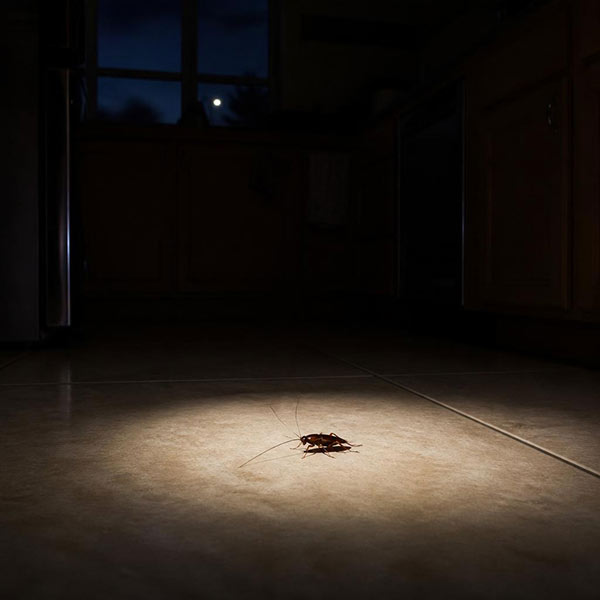
If you’ve spotted a cockroach in your Toronto home — or you just can’t stop thinking about the possibility of one — you’re not alone. These are the six questions our technicians get asked almost every week. Here are honest, no-panic answers, plus when a single sighting really does warrant a call.
1. Why do I only see one cockroach?
Short answer: you’re almost never seeing just one.
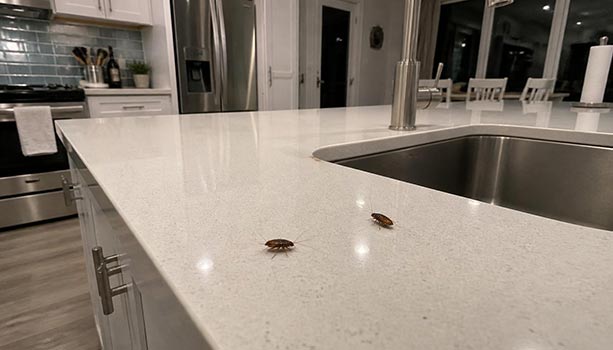
Cockroaches are social, secretive, and nocturnal. They live in tight harborage — behind baseboards, inside wall voids, under fridges — and only the boldest (usually juveniles pushed out by overcrowding, or hungry adults) venture into open space during the day. If one made it to your countertop at noon, the hidden population behind the scenes is usually well-established.
The exception: a single roach that hitchhiked in on a grocery bag, cardboard box, or piece of used furniture. That does happen. But you won’t know which situation you’re in until you look for secondary signs — droppings (like coarse black pepper), a musty smell, or shed skins in cabinet corners.
2. Can cockroaches come up through drains?
Yes — but probably not the way you’re imagining.
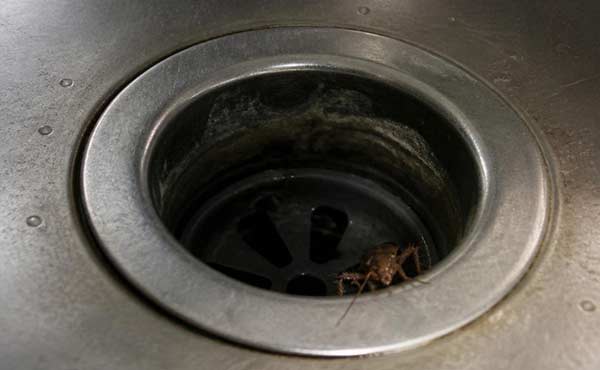
The common German cockroach (the small tan one most Toronto homes deal with) doesn’t swim up from the sewer. It lives inside your building and uses drains as travel corridors between units — especially in condos, semis, and apartments where plumbing stacks connect multiple homes.
The larger, darker Oriental cockroach (sometimes called a “water bug”) can travel up through floor drains and older plumbing, particularly in basements, laundry rooms, and commercial kitchens. Dry P-traps — the U-shaped pipe under a rarely-used sink or floor drain — are the main entry point.
Quick fix: run water in every drain once a week and pour a cup down unused floor drains monthly to keep the trap sealed.
3. Why are cockroaches active at night?
Cockroaches evolved to avoid predators — birds, lizards, and now humans — that hunt by sight during the day. Their bodies are built for the dark: light-sensitive eyes, long antennae for feeling their way around, and a nervous system tuned to detect the slightest air movement (which is why they scatter the instant you flip a light on).
Peak activity in most GTA homes is between roughly 11 p.m. and 4 a.m., when the kitchen is quiet, warm, and full of crumbs. If you want to gauge how bad an infestation is, walk into the kitchen at 2 a.m. with your phone flashlight ready. What you see (or don’t see) in the first three seconds is the most honest inspection you can do at home.
4. Will keeping the lights on stop cockroaches?
No — and this is the most common myth we hear.
Leaving the kitchen light on for a night or two might delay them, but roaches adapt fast. Within days they’ll simply forage in the shadows behind the fridge, under the stove, and inside cabinets you rarely open. In heavily infested homes, we routinely see cockroaches out in full daylight — that’s a sign the harborage is overcrowded, not that they’ve lost their fear of light.
What actually works: eliminating food, water, and harborage. That means fixing drips, sealing cracks around baseboards and pipe penetrations, storing pantry food in sealed containers, and taking the kitchen garbage out nightly.
5. Can cockroaches live inside appliances?
Absolutely — and it’s one of the reasons infestations are so hard to DIY away.
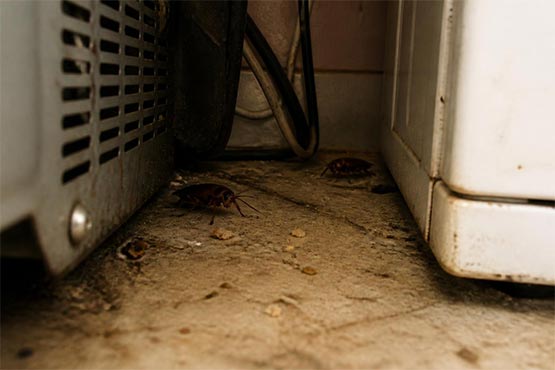
The warm, dark, food-adjacent inside of these appliances is prime cockroach real estate:
- Microwaves (behind the control panel and inside the door frame)
- Toasters and toaster ovens (crumb tray and heating element housing)
- Refrigerator motor compartments (warm, humid, hidden)
- Dishwashers (under the tub, near the pump)
- Coffee makers (drip tray, water reservoir cavity)
This is also why cockroaches travel between homes: they hide inside used or moved appliances and get carried right through the door. If you’ve ever picked up a “free” microwave from Kijiji or a curbside toaster oven, you know exactly what we mean.
6. Why do cockroaches suddenly appear after moving?
Three usual suspects:
- They came with you. Cardboard moving boxes are cockroach magnets — the corrugated flutes are the perfect hiding place, and egg cases (oothecae) can be glued to the underside of boxes, furniture, or picture frames. One box with one egg case can hatch 30–40 nymphs weeks after you unpack.
- They were already there. The previous tenant may have had an infestation that was treated superficially or not at all. Roaches went dormant in wall voids and came back out once you brought food and warmth into the space.
- They live in the building. In Toronto condos, apartments, and semi-detached homes, cockroaches move through shared walls, plumbing chases, and hallways. A new tenant across the hall who’s untreated is often the source.
If you’ve just moved in and spot even one, inspect boxes as you unpack, check under sinks and behind the stove for droppings, and treat early – a small population is dramatically cheaper to handle than a mature one.
When one cockroach really does mean “call someone”
- You see droppings, shed skins, or a musty odour anywhere in the kitchen or bathroom
- You see a roach during the day (indicates overcrowded harborage)
- You live in a multi-unit building where neighbours have reported them
- You’ve tried grocery-store sprays and they scattered but came back
Store-bought aerosols make roaches disperse into the walls — often worsening the spread. Professional gel baits and targeted growth regulators break the reproductive cycle, which is the only reliable way to end an infestation.
Ready to stop wondering?
If any of these questions hit close to home, book a discreet inspection with Swift-X Pest Control. Our unmarked vehicles and technicians in plain clothing mean your neighbours never need to know — and most Toronto and GTA homes are treated in a single visit.
? Call (647) 478-2128 for a free quote.
Related reading: