

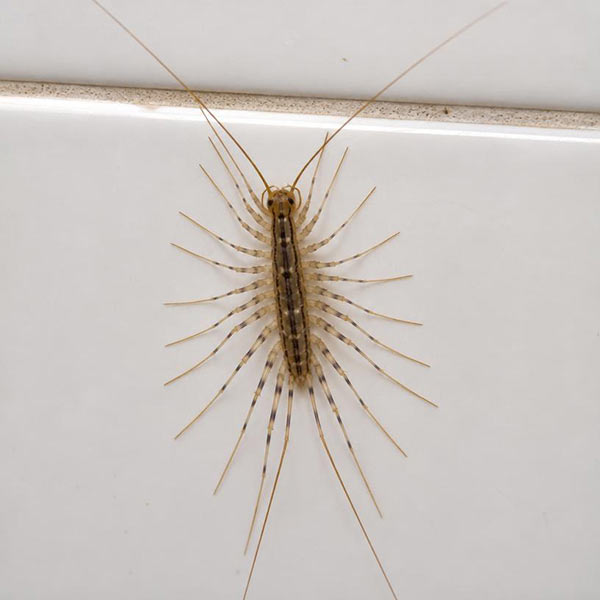
Few pests trigger the same “what IS that?!” reaction as a house centipede darting across the bathroom floor at 11 p.m. With 15 pairs of impossibly long legs and lightning speed, they look far more alarming than they actually are — but that doesn’t mean you want to share your home with them.
If you keep spotting a bathroom centipede in the tub, or you’re finding centipedes in the basement every time you go down to do laundry, here’s what’s going on and how to get rid of them for good.
What are house centipedes?
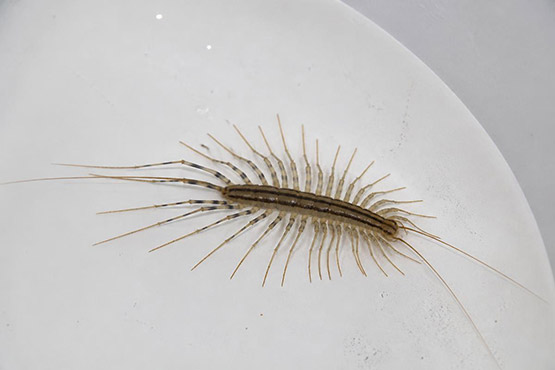
House centipedes (Scutigera coleoptrata) are the pale, yellow-grey, fast-moving centipedes most Toronto and GTA homeowners encounter indoors. They have:
- A body around 25–40 mm long
- 15 pairs of long, thread-like legs
- Two very long antennae at the front, and equally long rear appendages
- A habit of freezing when spotted, then bolting at high speed
Unlike some outdoor centipede species, house centipedes actually live their entire life indoors once they establish. That’s part of why they seem to keep coming back.
Why do I have a centipede inside the house?
A centipede inside the house almost always means one of three things:
- Moisture. Centipedes need humid environments — damp basements, bathrooms, laundry rooms, and crawl spaces are ideal.
- A food supply. House centipedes are predators. They eat silverfish, cockroaches, spiders, ants, bed bug nymphs, and other small insects. If they’re thriving, something else is too.
- Entry points. Gaps around basement windows, foundation cracks, utility penetrations, and unsealed vents let them wander in from outside.
The good news: they don’t damage your home, don’t chew wires, and don’t spread disease. The bad news: they signal that your home has the conditions other pests love as well.
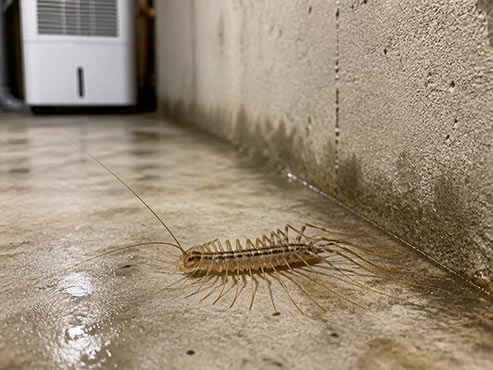
Why are there so many centipedes in the basement?
Centipedes in the basement are the #1 complaint we hear at Swift-X Pest Control. Basements check every box for them:
- Cool, humid air (especially in older Toronto and Barrie homes)
- Undisturbed corners, behind boxes, along baseboards
- Access to floor drains, sump pits, and wall cavities
- A steady diet of other basement-loving insects
If you’re seeing several a week, you likely have an established indoor population — not just the occasional wanderer.
Why is there a bathroom centipede in my tub or sink?
A bathroom centipede stuck in a porcelain tub or sink didn’t crawl up the drain — smooth porcelain is just too slippery for them to climb out once they fall in. They came in from the wall/floor junction, behind the vanity, or from a nearby baseboard hunting for moisture and prey.
Consistent bathroom sightings usually mean:
- A slow leak under the vanity or behind the toilet
- Poor ventilation trapping humidity
- Gaps where plumbing enters the wall
How to get rid of house centipedes (what actually works)
Here’s the real, honest answer on how to get rid of house centipedes — sprays alone rarely solve it. You need to attack the conditions, the food source, and the population at the same time.
1. Cut the humidity
Aim to keep basements and bathrooms below 50% relative humidity:
- Run a dehumidifier in the basement year-round
- Use bathroom fans during and 15–20 minutes after every shower
- Repair leaks under sinks and around the water heater
- Improve grading so water drains away from the foundation
2. Eliminate their food supply
If centipedes are thriving, you almost certainly have silverfish, small roaches, spiders, or other insects living in the walls too. Ongoing house centipede pest control means treating those secondary pests, not just the centipedes you can see.
3. Seal entry points
- Caulk gaps along baseboards, especially in basements
- Seal around plumbing and wiring penetrations
- Add door sweeps to basement doors
- Repair or replace damaged window screens and weather-stripping
4. Professional treatment for stubborn infestations
DIY sprays only kill the centipedes you spot — usually a small fraction of the population hiding in walls, drains, and voids. Effective house centipede extermination combines:
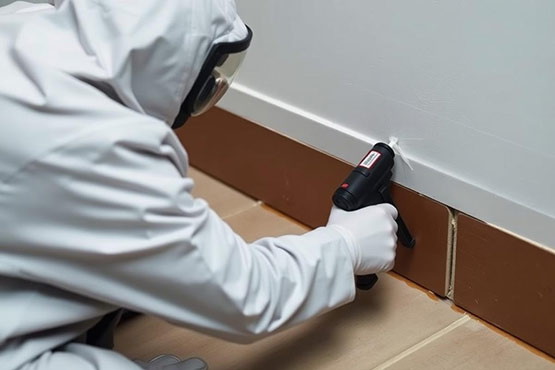
- A residual crack-and-crevice treatment along baseboards, under sinks, and behind appliances
- Targeted treatment of drains, floor cracks, and utility penetrations
- Dust applications inside wall voids where centipedes actually live
- Treatment of secondary prey pests so the food source disappears
- An exterior perimeter treatment to stop new ones from wandering in
Do house centipedes bite?
Technically yes — they have modified front legs that can deliver a pinch — but bites on humans are extremely rare and comparable to a mild bee sting. They’re not aggressive and will almost always flee rather than confront you.
That said, “harmless” doesn’t mean “welcome.” Most homeowners who call us just want them gone.
When to call a professional
Call us if:
- You’re seeing centipedes every week or multiple in a single night
- They keep coming back after DIY treatments
- You’ve spotted them in bedrooms or kitchens (not just the basement)
- You suspect they’re feeding on another pest problem (silverfish, roaches, spiders)
Swift-X house centipede pest control in Toronto, GTA & Barrie
Swift-X Pest Control provides discreet, effective house centipede extermination across Toronto, the GTA, and Barrie. In most cases we can schedule next-day service, treat the visible infestation, and set up an exterior perimeter to prevent new ones.
Every treatment includes a full inspection to find the moisture source and secondary pests feeding the centipede population — because killing the centipedes you see today doesn’t help if the conditions that brought them are still there tomorrow.
Call or text Swift-X Pest Control today to book your house centipede inspection and treatment.
FAQ
Are house centipedes dangerous? No. They don’t spread disease, damage property, or bite unless provoked. Their presence is more of a nuisance and an indicator of moisture or other pests.
Will one treatment get rid of them? Usually one thorough treatment plus moisture and entry-point control handles most infestations. Severe cases with heavy prey populations may need a follow-up.
Why do I only see them at night? House centipedes are nocturnal hunters. Daytime sightings usually mean the population is large enough that some are being displaced from their hiding spots.
Can I just squish them and move on? You can — but if you’re seeing them regularly, there’s a population living in the walls and a reason they’re thriving. Treating the source is the only long-term fix.