

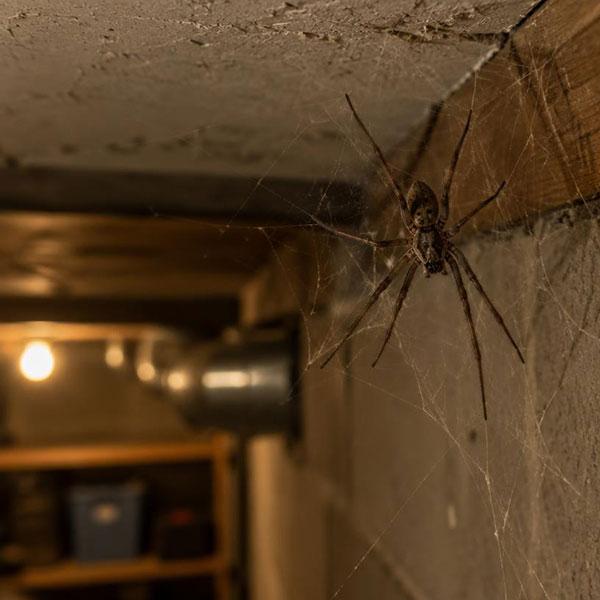
If you’ve noticed more spiders showing up in your home lately — in the basement, along ceiling corners, or darting across the floor at night — you’re not imagining it. Late summer and fall are peak spider season in Toronto, and calls about spiders spike every September and October across the GTA.
Here’s the good news: almost every spider you’ll find in a Toronto home is harmless. But that doesn’t mean you want them setting up shop in your basement. This guide covers which spiders you’re actually dealing with, why they’re in your house, and what actually works to get rid of them. Be sure to visit our Spider Service section when you’re ready to chat with us.
Common House Spiders in Toronto and the GTA
Ontario is home to hundreds of spider species, but only a handful regularly turn up indoors. Knowing which one you’re looking at helps you understand why it’s there.
Common house spider (Parasteatoda tepidariorum). The classic cobweb spider — small, brownish-grey, with a round abdomen. They build messy, tangled webs in ceiling corners, window frames, and basements, and they rarely leave them.
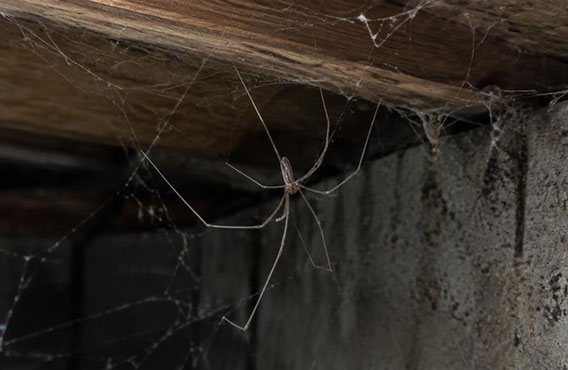
Cellar spiders (“daddy longlegs spiders”). The ones with a tiny body and extremely long, thin legs, hanging in webs in basements, crawl spaces, and garages. They thrive in damp, undisturbed areas and often gather in groups.
Wolf spiders. Big, fast, and hairy — these are the ones that startle people by running across the floor. Wolf spiders don’t build webs; they hunt on the ground and often wander indoors in the fall. Their size makes them look alarming, but they’re not dangerous.
Yellow sac spiders. Small, pale yellow-green spiders that build little silk sacs in the corners where walls meet ceilings. They’re active hunters at night and are responsible for many of the “mystery bites” blamed on other spiders.
What about dangerous spiders? Despite the rumours, black widows are extremely rare in the GTA and brown recluse spiders are not established in Ontario at all. The spiders in your Toronto home are a nuisance, not a health threat.
Why Spiders Move Into Your House in the Fall
Spiders don’t come inside to escape the cold the way mice or cluster flies do — most house spiders have lived alongside humans for generations and prefer indoor conditions year-round. So why the sudden surge in sightings every fall?
Mating season. Male spiders that have been sitting quietly all summer start wandering in search of females. That’s why you suddenly see big spiders out in the open in September and October — they’re on the move.
Food supply. Spiders go where the prey is. If your home has flies, ants, silverfish, or other small insects, spiders will follow. A spider problem is often a sign of a quieter insect problem underneath it.
Easy entry points. Gaps under doors, cracked foundation, torn window screens, unsealed utility penetrations, and window wells all funnel spiders — and their prey — straight into your basement.
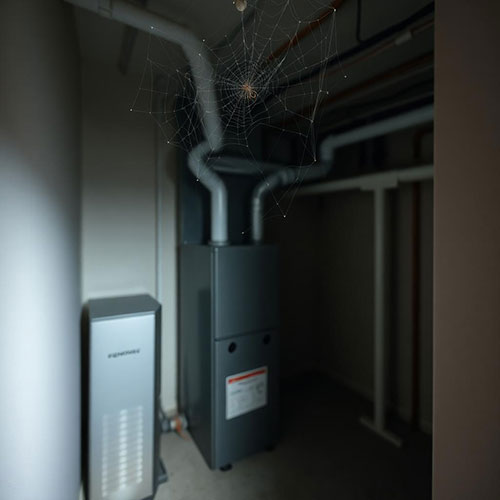
How to Get Rid of Spiders in the House: What Actually Works
1. Remove webs and egg sacs
Vacuum webs, spiders, and egg sacs regularly — a single egg sac can hold hundreds of spiderlings. Use the hose attachment to reach ceiling corners, behind furniture, and along baseboards. Empty the vacuum canister or bag outside right away.
2. Cut off their food supply
This is the step most people skip, and it’s the most important one. If spiders have nothing to eat, they leave. Deal with the flies, ants, and other insects in your home — or have a professional treat for them — and spider numbers drop on their own.
3. Reduce humidity
Cellar spiders and many other species love moisture. Run a dehumidifier in the basement, fix leaking pipes, and make sure your sump pit is covered. A dry basement is far less inviting.
4. Declutter storage areas
Cardboard boxes, piles of clothing, and cluttered shelving create endless hiding spots. Switch to sealed plastic bins and keep storage off the floor and away from walls where possible.
5. Seal entry points
Check weatherstripping on doors, caulk gaps around windows and utility lines, repair torn screens, and install door sweeps. Pay special attention to basement windows and window wells — a major spider highway in older Toronto homes.
6. Skip the sticky-trap-only approach
Glue traps catch a few spiders and are useful for monitoring, but they won’t solve an established problem on their own. Same goes for most essential-oil sprays — they may repel spiders briefly but don’t address why the spiders are there.
When to Call a Professional
An occasional spider is normal. But it’s worth calling a pest control professional when:
- You’re seeing spiders daily, or in multiple rooms
- You keep finding egg sacs despite regular cleaning
- You have a wolf spider or sac spider problem that isn’t improving
- Spiders are part of a bigger picture — ongoing insect activity feeding them
A professional spider treatment targets the cracks, corners, and voids where spiders hide and lay eggs, and — just as importantly — the underlying insect population keeping them fed. For homes near ravines, the waterfront, or older neighbourhoods with stone foundations, a seasonal exterior perimeter treatment can dramatically cut the number of spiders making it inside in the first place.
Spider Control in Toronto and the GTA
At Swift-X Pest Control, we deal with spiders the right way — treating both the spiders and the conditions attracting them. Our spider service includes a full interior and exterior inspection, targeted treatment of webs, harbourage areas, and entry points, and practical advice on keeping them from coming back. We work discreetly, so your neighbours won’t know a thing.
Seeing more spiders than you’d like this fall? Call or text Swift-X Pest Control today for spider control in Toronto and the GTA, and we’ll get your home back to normal.
Frequently Asked Questions
Are house spiders in Toronto dangerous? No. The spiders commonly found in GTA homes — house spiders, cellar spiders, wolf spiders, and sac spiders — are not dangerous to people. Bites are rare and typically cause only mild, short-lived irritation. Black widows are extremely rare in the Toronto area, and brown recluse spiders are not established in Ontario.
Why do I suddenly have so many spiders in my house? Fall is spider mating season in Ontario, so males leave their webs and wander in search of females — which is why you see more of them out in the open in September and October. A steady spider presence usually also signals an underlying insect population they’re feeding on.
What is the fastest way to get rid of spiders in the house? Vacuum up webs, spiders, and egg sacs, then address the insects they’re eating and the entry points they’re using. For established problems, a professional treatment of harbourage areas and entry points is the fastest lasting fix.
Do spiders come back after treatment? A proper treatment dramatically reduces spiders, but new ones can wander in over time — especially in fall. Reducing humidity and clutter, and controlling other insects keeps numbers down long-term. Seasonal perimeter treatments help for homes in high-pressure areas.
Should I kill house spiders or leave them? A spider or two in the basement is actually doing you a favour by eating other insects. But when webs and sightings become regular, or spiders are spreading through living areas, it’s reasonable to treat them like any other pest.
Related Reading:
Main Spider Service Info
I Found a Spider in My Bed — Should I Worry?