

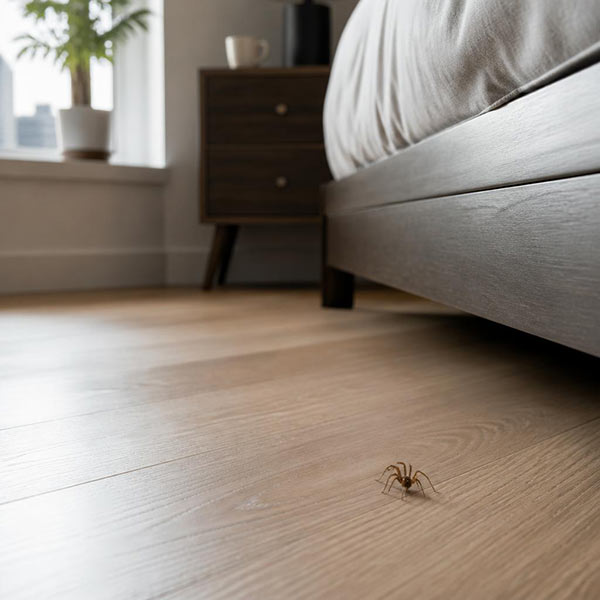
You flipped the pillow, pulled back the duvet, or felt something on your leg at 3 a.m. — and there it was. A spider. In your bed.
First: take a breath. In nearly 20 years treating Toronto and GTA homes, the spider in your bed is almost never dangerous, and it almost certainly wasn’t hunting you. But there is a reason it ended up there, and if you’ve seen one, you’ll likely see more. If you’re experiencing a more urgent issue you’d like to deal with right away, check out our service page for spider extermination, or give us a call to speak with a technician.
Here’s the honest answer to what it was, why it’s there, and what to actually do about it.
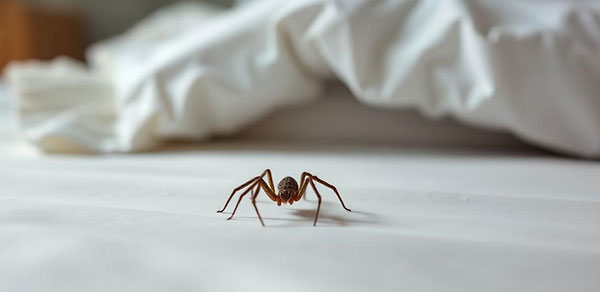
The Spider You Probably Saw
In Toronto bedrooms, 9 times out of 10, it’s one of these five:
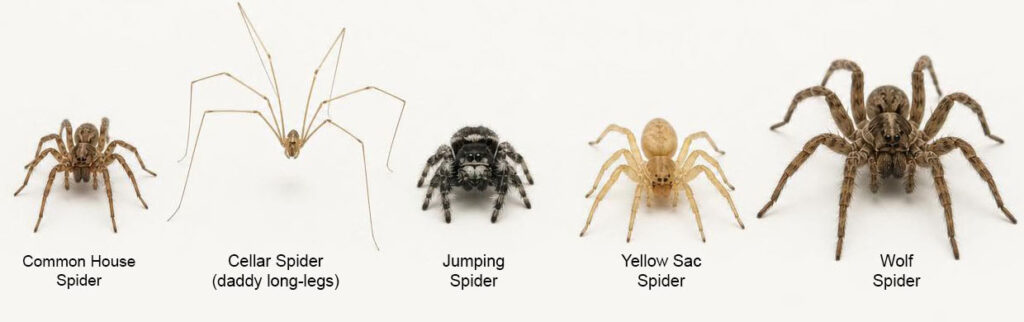
- Common house spider — small, brownish, builds messy cobwebs in corners. The #1 bedroom visitor.
- Cellar spider (daddy long-legs) — tiny body, impossibly long thin legs. Hangs upside down in ceiling corners.
- Jumping spider — small, fuzzy, often with iridescent green or white markings. Curious, will turn to look at you. Active hunter, doesn’t build a web.
- Yellow sac spider — pale yellow, fast. The most common biter in Ontario homes — bites are like a mild bee sting, not dangerous.
- Wolf spider — bigger, hairy, fast-moving. Looks alarming. Not venomous to humans.
Black widows? Present in southern Ontario but extremely rare in Toronto homes — almost never indoors.
Brown recluse? Not established in Ontario. If someone tells you that’s what bit them, it almost certainly wasn’t.
Why It Was in Your Bed
Spiders don’t want to be near you. Your bed is warm, but it’s also a moving, unpredictable landscape — bad hunting ground. So why was it there?
Three real reasons:
- It fell. Most bedroom spiders live in the ceiling corner, on the curtain rod, or above the headboard. They drop on a silk line and end up on the sheets by accident.
- It followed prey. If you’ve had fruit flies, fungus gnats, or any small flying insect in the bedroom, spiders will move in to hunt them.
- It came in from outside. Late summer and early fall (August–October) is mating season — male spiders wander indoors looking for females, and bedroom windows are an easy entry point.
Should You Actually Be Worried?
Medically: No. Healthy Ontario adults aren’t at risk from any common bedroom spider. Even yellow sac bites usually clear in a day or two.
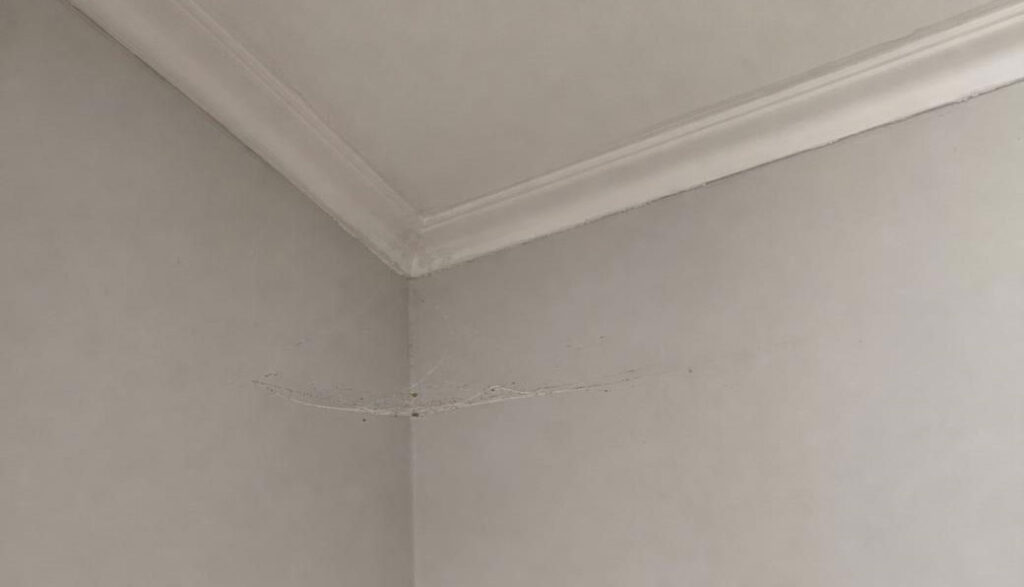
As a sign of a bigger problem: Sometimes, yes. One wandering spider in September is normal. Multiple spiders, fresh webs in different rooms, or egg sacs mean you have a steady food supply (other bugs) and likely entry points that need sealing.
The honest test: walk through your home tonight and look at ceiling corners, window frames, basement stairs, and behind furniture. If you count more than 4–5 webs, you have a spider situation, not a spider sighting.
What to Do Right Now
Don’t smash it on the mattress. You’ll have a stain and you still have to find the body. Use a cup and a piece of cardboard, take it outside, and let it go. Spiders eat the bugs you like even less.
Then, before bed tonight:
- Pull the bed 10–15 cm away from the wall so spiders can’t crawl directly onto it.
- Shake out the duvet and check the pillow before lying down (for the next few nights, until you’re calm).
- Vacuum ceiling corners, behind the headboard, and under the bed. Empty the canister outside.
- Turn off the bedroom-side exterior light, or switch to a yellow “bug” bulb. Fewer moths = fewer spiders.
How to Keep Them Out Long-Term
Spiders come in for two reasons: food and gaps. Remove both:
- Seal entry points. Check window screens for tears, the gap under the bedroom door, weatherstripping, and any cable/AC penetrations through exterior walls.
- Reduce other bugs. Spiders are a symptom. If you have fruit flies, drain flies, fungus gnats, or boxelder bugs, the spiders are eating them. Solve the food source.
- Cut the clutter under the bed. Cardboard, storage bins, and stacked shoes are spider real estate.
- Dust webs weekly during August–October. Disrupting webs makes spiders move on.
When to Call a Pro
DIY works for the occasional spider. Call us if you’re seeing:
- Multiple spiders per week in the bedroom or anywhere upstairs
- Webs returning within days of being cleared
- Egg sacs (small silk balls) in corners, under furniture, or in window tracks
- Yellow sac spider bites on family members
- Any spider you can’t identify and it’s making you uncomfortable in your own home
Our Toronto and GTA technicians treat the perimeter and entry points (where spiders actually come from), not just the rooms you’ve seen them in. Unmarked vehicles, discreet service — your neighbours won’t know we were there.
The Bottom Line
A spider in your bed is startling, not dangerous. But it is telling you something: there are gaps in your home and food inside it. Handle both, and the bedroom goes back to being yours.
Worried about what you’re seeing? Contact Swift X Pest Control for a no-pressure inspection across Toronto and the GTA, or call (647) 478-2128.