

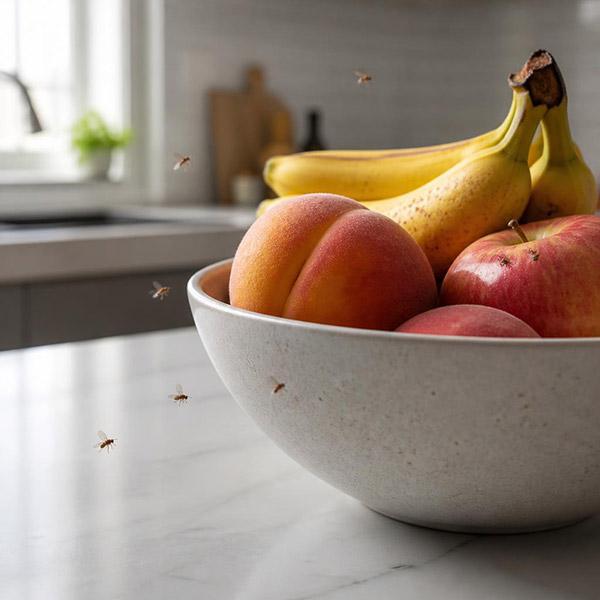
You walked into the kitchen, reached for a banana, and a tiny cloud lifted off the fruit bowl like smoke. By tomorrow there will be twice as many. By the weekend, they’ll be in your wine glass.
Welcome to fruit fly season.
Every summer and early fall, the same scene plays out in kitchens across the GTA – from downtown condos to North York bungalows, and we receive phone calls with the same question “how do I get rid of fruit flies?”. Warm weather, ripe produce, and a single forgotten peach are all it takes to turn your kitchen into a hatching ground for thousands of tiny flies.
The good news: most fruit fly problems can be solved in under a week with stuff you already own. The not-so-good news: if those “fruit flies” aren’t actually fruit flies, the trap on your counter will do absolutely nothing.
Let’s fix both.
First: Are Those Even Fruit Flies?
This is where most people go wrong. There are three tiny flying insects that invade Toronto homes this time of year, and they look almost identical at a glance — but they breed in completely different places.
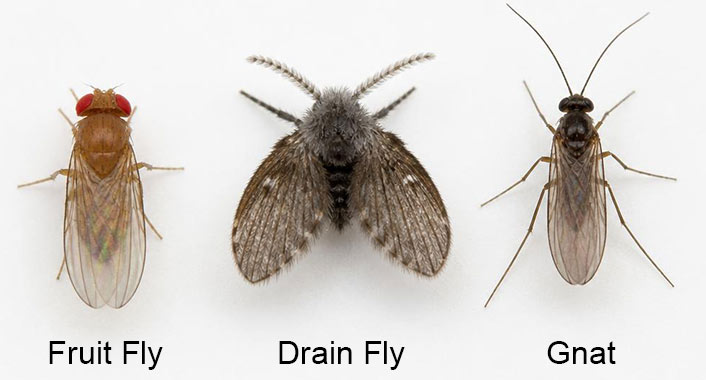
Fruit flies (Drosophila)
- Look like: Tan or light brown body, often with bright red eyes, about 3 mm long
- Hang out near: Fruit bowls, recycling bins, wine bottles, garbage, juice spills
- Breed in: Anything fermenting — overripe fruit, sticky drink residue, the wet bottom of a recycling bin
Drain flies (a.k.a. “moth flies”)
- Look like: Dark grey, fuzzy, almost moth-shaped wings, about 2 mm
- Hang out near: Sinks, showers, floor drains, basement bathrooms
- Breed in: The slimy gunk inside drain pipes
Fungus gnats
- Look like: Skinny, dark, mosquito-like with long legs
- Hang out near: Houseplants, especially ones you just watered
- Breed in: The top inch of damp potting soil
If your “fruit fly” trap is full of vinegar and catching nothing, you almost certainly have drain flies or fungus gnats — not fruit flies. The fix is different for each.
Where They Actually Come From
Despite what your aunt told you, fruit flies don’t spontaneously appear. They get in three ways:
- You brought them home. Eggs are already on the skin of grocery-store fruit, especially bananas, tomatoes, and stone fruit. Once the fruit ripens on your counter, the eggs hatch.
- They flew in. Adult flies can squeeze through standard window screens and are strongly attracted to the smell of fermentation from your kitchen or recycling bin.
- You’re feeding a hidden colony. A forgotten potato in the back of the pantry, a splash of beer behind the fridge, or a sticky recycling bin in the garage can produce hundreds of flies a week without you ever seeing the source.
A single female fruit fly lays up to 500 eggs, and the full egg-to-adult cycle takes about 8 days in a warm Toronto kitchen. That’s why the problem seems to explode overnight.
How to Get Rid of Fruit Flies: The 48-Hour Plan
Do all of these on the same day. Skipping one step is why most DIY attempts fail.
1. Find and destroy the breeding source
This is 90% of the battle. Walk through your kitchen and look for:
- Overripe fruit (toss it — don’t just put it in the fridge)
- The bottom of the recycling bin (rinse with hot soapy water)
- Beer and wine bottles waiting to be returned
- Onions or potatoes that have started to soften
- The drip tray under the fridge
- Mop heads and dish sponges that stay wet
2. Set the vinegar trap
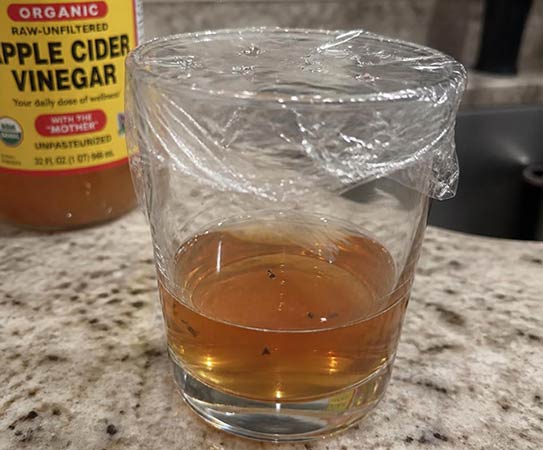
Pour about an inch of apple cider vinegar into a glass, add one drop of dish soap (this breaks the surface tension so they sink), and cover with plastic wrap pierced with a few small holes. Set it next to wherever you see the most flies. You’ll catch dozens overnight.
If you don’t have ACV, a splash of red wine, beer, or even ripe banana peel in the bottom of the glass works almost as well.
3. Pour boiling water down the kitchen drain
Even if you have fruit flies and not drain flies, kitchen drains often hide some larvae. A kettle of boiling water followed by a baking soda + vinegar flush helps shut down any backup breeding site.
4. Take the garbage and recycling outside — every night
For at least the next two weeks. Fruit flies can lay eggs in an open garbage bag in under an hour.
5. Store fruit in the fridge temporarily
It’s annoying, but breaking the breeding cycle for one week is what gets you back to leaving fruit on the counter.
What About Fungus Gnats in Houseplants?
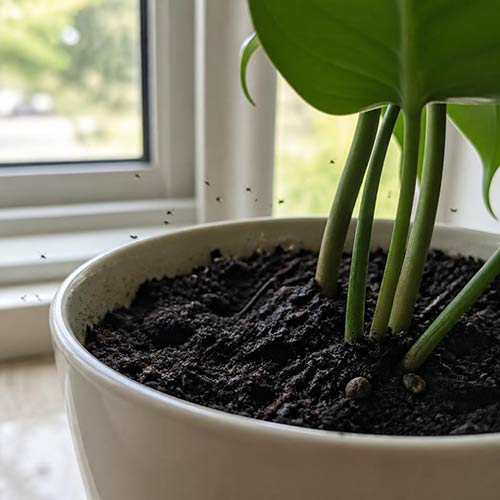
If the flies are coming off your plants when you walk past them, you have fungus gnats. Vinegar traps won’t help much. Instead:
- Let the top 2 inches of soil dry out completely between waterings — this kills the larvae
- Top-dress the pot with a half-inch layer of sand or small gravel (adults can’t lay eggs through it)
- Sticky yellow traps stuck in the pot catch the adults
- A drench with BTI (Mosquito Bits) dissolved in water kills the larvae without hurting the plant
Two to three weeks of dry-ish soil usually ends the cycle.
When DIY Isn’t Enough — and a Professional Makes Sense
Most fruit fly issues are a one-week kitchen problem. But there are a few situations where calling a Toronto pest control company is genuinely worth it:
- The flies keep coming back week after week despite repeatedly finding and removing every source you can think of. This usually points to a hidden breeding site you can’t see — a spill under the dishwasher, a slow leak inside a wall, or organic buildup in a kitchen drain line.
- You’re a restaurant, café, café, bar, or food business. Drain flies and fruit flies in a commercial kitchen are a health-inspection issue. A professional drain treatment with a bio-enzyme foam is the only thing that reliably clears built-up biofilm inside the lines.
- The problem is building-wide in a condo or rental. If your neighbours have it too, the source may be a shared garbage chute, compactor room, or main drain stack — not anything you can fix alone.
- What you actually have is drain flies, not fruit flies, and pouring boiling water and drain cleaner hasn’t worked after two weeks. Professional-grade enzyme foam reaches deeper into the line than anything sold at Home Hardware.
For a normal household kitchen outbreak in July, you almost never need this. Try the 48-hour plan first.
Quick Prevention Checklist for the Rest of Summer
- Keep ripening fruit in a bowl with a mesh cover, or in the fridge
- Rinse recycling before it goes in the bin
- Take garbage out nightly during a heatwave
- Run the garburator with cold water for 30 seconds after every use
- Wipe down counters and the inside of the fruit bowl every couple of days
- Empty drip trays under appliances monthly
Do these and you’ll go from “constant fly cloud” to “occasional one I forgot about” — which is about as fly-free as a Toronto kitchen gets in August.
Still Battling Flies?
If you’ve tried everything and they keep coming back — or you’re pretty sure they’re coming up from your drains — Swift-X Pest Control offers same-day inspections across Toronto and the GTA.
Call (647) 478-2128 for a free quote.