

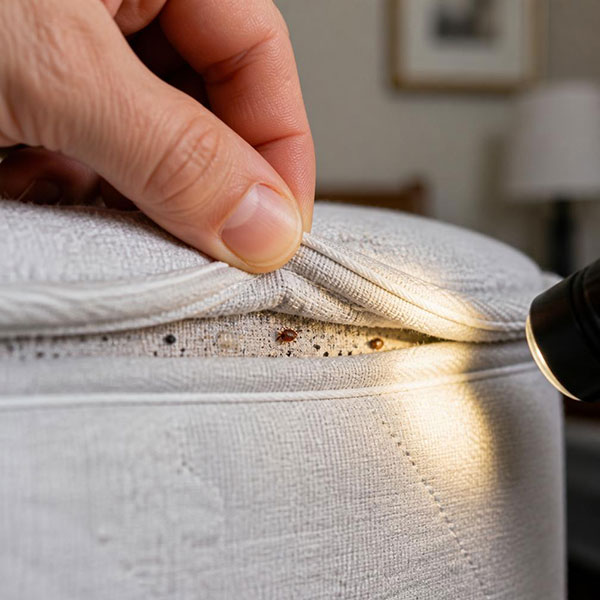
The 2 a.m. question: “Is that a bed bug bite?”
You wake up, roll over, and spot a couple of small red welts on your arm you didn’t have last night. Your brain jumps straight to the worst-case scenario — bed bugs. In Toronto, that fear is understandable. The city has been on Orkin Canada’s Top 25 Bed Bug Cities list every single year, and cases spike every summer as people travel, move, and bring second-hand furniture home.
The good news: not every itchy mark is a bed bug bite, and there are specific things you can check tonight to know for sure. This guide walks you through both — what bites actually look like, and how to inspect your bed like a technician would.
What do bed bug bites look like?
Bed bug bites are usually:
- Small, red, and slightly raised — similar to a mosquito bite but flatter
- Extremely itchy, often more so 24–48 hours after the bite
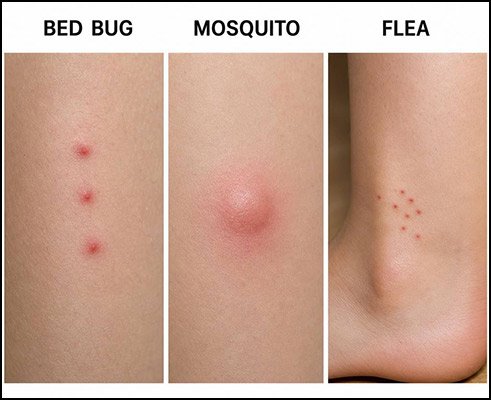
- Grouped in a line, zigzag, or small cluster of 2–4 on one patch of skin
- On exposed areas you slept with uncovered — arms, shoulders, neck, ankles, upper back
That “line of 3” pattern is the classic tell. Bed bugs feed, get bumped, move a few millimetres, and feed again — leaving what pest pros call a “breakfast, lunch, dinner” pattern.
Important reality check
About 30% of people don’t react to bed bug bites at all, and reactions can take up to two weeks to appear. That means the absence of bites doesn’t mean the absence of bed bugs. Bites are one clue, but never the only one.
Bed bug bites vs. mosquito bites vs. flea bites
Because so many Toronto homeowners misidentify bites, here’s a quick side-by-side:
| Feature | Bed Bug Bites | Mosquito Bites | Flea Bites |
|---|---|---|---|
| Shape | Small, flat, red welts | Puffy, round, raised bump | Tiny red dot with red halo |
| Pattern | Line, zigzag, or cluster of 2–4 | Random, single bites | Clusters of many bites |
| Where on body | Arms, neck, back, ankles (exposed skin at night) | Anywhere exposed | Ankles and lower legs mostly |
| When they appear | Overnight, only when in bed | Any time outdoors or windows open | Any time, often after pets/carpet |
| Itch level | Very itchy, worse after 1–2 days | Itchy right away, fades in a day | Very itchy, often painful |
Rule of thumb: if bites only show up after sleeping, in a straight line, on parts of your body that were uncovered — start inspecting the bed.
How to check your bed for bed bugs (step by step)
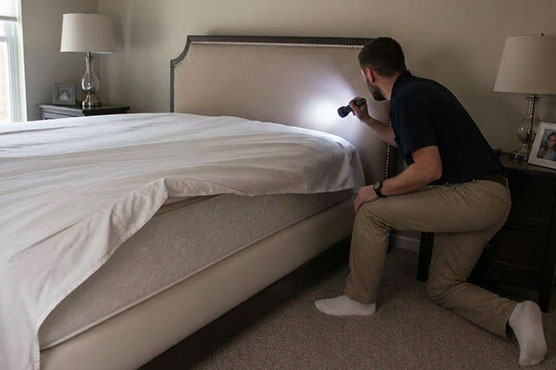
You don’t need special equipment — just a flashlight, an old credit card or expired gift card, and about 20 minutes. Do this in daylight or with bright overhead light on. Wear light-coloured clothing so anything that crawls onto you is easier to spot.
Step 1: Strip the bed completely
Remove all sheets, pillowcases, and the mattress cover. Put them straight into a plastic bag if you suspect an active infestation — don’t walk them through the house.
Step 2: Inspect the mattress seams and tufts
This is where bed bugs hide 90% of the time. Run your flashlight along:
- All four piped seams on the top and bottom of the mattress
- The corners and label tags (they love hiding under tags)
- Any tufts, buttons, or pleated areas
You’re looking for:
- Live bugs — flat, reddish-brown, apple-seed sized adults, or tiny translucent nymphs
- Dark rust-coloured dots — dried blood or fecal spots that smear if you wipe them with a wet paper towel
- Pale yellow shed skins — bed bugs moult 5 times before adulthood, leaving casings behind
- Tiny white eggs — about 1mm, often stuck in seams
Step 3: Check the box spring
Flip the box spring on its side and inspect the underside — pull back the thin fabric dust cover at the corners (most infestations we treat in Toronto are hiding here, not in the mattress). Look along every wood staple line.
Step 4: Inspect the bed frame
Bed bugs love wood joints, screw holes, and cracks. With your flashlight and card, check:
- Headboard back and any bolt holes
- Frame rails, especially where the box spring rests
- Slats — top and underside
Step 5: Look at nearby surroundings
Bed bugs travel outward from the bed. Also inspect:
- Nightstand drawers and the back/bottom
- Baseboards and outlet covers within 5 feet of the bed
- Under lamp bases and picture frames on the wall
- Curtains and window trim
Signs of bed bugs (besides live bugs)
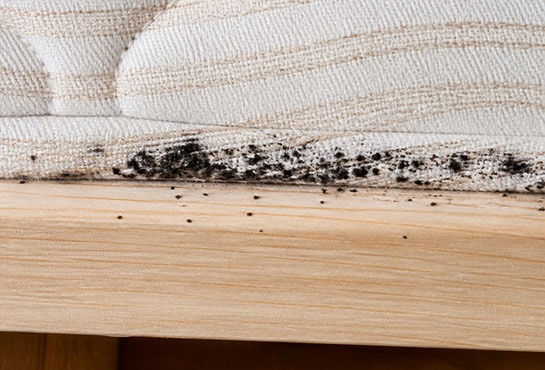
If you don’t see a live bug, look for these secondary signs — they’re often easier to spot:
- Small blood smears on your sheets (from bugs crushed while feeding)
- Rust-coloured or black dots on the mattress, pillow, or sheets — this is bed bug feces
- A faint, sweet, musty smell in the room (often described as “coriander” or damp shoes) — usually only present in larger infestations
- Shed skins or eggshells in mattress seams and corners
What NOT to do if you find them
Toronto homeowners often make the infestation worse by reacting too fast. Please do not:
- Throw out the mattress — you’ll spread bugs through the hallway, elevator, and truck. Bag it only after professional treatment.
- Move to the couch or another bed — bed bugs follow you and now you have two infested rooms instead of one.
- Spray hardware store bug spray — it makes bed bugs scatter into walls and adjacent units, and most infestations we see have already been resistant to pyrethroid sprays for years.
- Bomb the room with a fogger — same problem, but worse.
When to call a professional
DIY inspection is great. DIY treatment is where most people lose. Call a licensed pest control company if:
- You’ve confirmed live bugs, shed skins, or fecal spots
- Bites are continuing after washing bedding and vacuuming
- You live in a condo, apartment, or semi-detached — adjacent units are almost certainly affected
- You’ve tried a store-bought spray already (this makes professional treatment harder, but not impossible — just tell the technician)
Swift-X Pest Control treats bed bugs across Toronto and the GTA using discreet, unmarked vehicles and professional-grade products that are safe once dry. We also offer multi-unit pricing for landlords and property managers.
Our related pages:
Quick FAQ
Do bed bug bites always itch?
No. Some people never react. Others develop welts that itch for a week.
Can bed bugs live in my clothes or hair?
They don’t live on you like lice — they only feed and leave. But they’ll hide in laundry piles, luggage, and folded clothes near the bed.
How fast do bed bugs spread in a Toronto apartment?
A single mated female can produce 200–500 eggs in her lifetime. Within 2–3 months an unnoticed infestation can spread through wall voids to a neighbouring unit.
Are bed bug bites dangerous?
Not medically — they don’t spread disease. But scratched bites can get infected, and the psychological toll (insomnia, anxiety) is very real.
Bottom line
If you found this article because you woke up with bites, take a breath. Strip the bed, grab a flashlight, and work through the checklist above. If you see a live bug, fecal spots, or shed skins — stop DIY-ing and call a pro before it spreads.
Suspect bed bugs in your Toronto or GTA home? Call Swift-X Pest Control for a discreet inspection and treatment plan.
Related Articles:
Top Reasons to KEEP Sleeping in a Bed Bug Infested Bed
Hotels: Best Steps to Detect and Avoid a Bed Bug Infestation
Discovering the Best Bed Bug Exterminator Toronto Can Offer