

If you’ve found bed bugs, the first two questions are always the same: what will this cost me, and will it actually work. Heat treatment is the option most Toronto homeowners hear about, and it’s also the one with the widest price spread — so here’s a straight answer on both.
What bed bug heat treatment costs
Pricing in the GTA depends on three things: the size of the treated area, how many rooms are involved, and how badly established the infestation is. Rough ranges look like this:
- Single room (bedroom or studio): $1,350 – $1,600
- 1–2 bedroom apartment or condo: $1,600 – $2,350
- Full house (3+ bedrooms): $2,500 – $4,500
- Follow-up / verification visit: usually included in a guaranteed treatment
Two things drive a quote up: heavy clutter that slows airflow, and multiple connected units in a building where bugs can travel between walls. Two things bring it down: catching it early, and confining it to one room.
Chemical treatments are usually cheaper per visit, but they typically need two to three visits spaced two weeks apart. Once you total those visits — plus the laundry, the time off work, and the weeks of continued biting — the gap between chemical and heat narrows a lot. Heat is one visit, one day, done.
Get an exact number: every home is different. Call or text (647) 478-2128 and we’ll give you a flat-rate price before anyone shows up.
Does heat treatment actually work?
Yes — and it’s the only treatment that reliably kills every life stage in a single visit, including eggs.
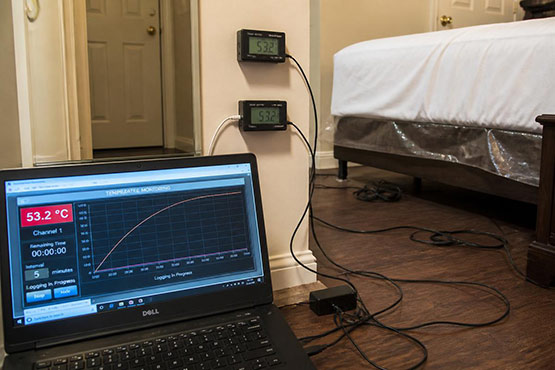
Bed bugs die at roughly 45°C (113°F) with sustained exposure. Eggs are tougher and need a bit more. A proper heat treatment brings the entire space to 50–56°C (122–133°F) and holds it there for several hours, with fans circulating air so the heat penetrates mattresses, box springs, baseboards, outlet boxes, and the furniture voids where bugs hide.
That last part is what separates a real heat treatment from a rented heater. Technicians place wireless temperature sensors at the coldest points in the room — under the bed, inside a dresser, behind the headboard — and monitor them live. The treatment isn’t finished when the room hits temperature; it’s finished when the coldest point has held lethal temperature long enough.
Why this matters versus sprays: most insecticides don’t kill eggs. That’s why chemical programs need repeat visits timed to catch newly hatched nymphs. Heat skips that entirely. There’s also no resistance issue — bed bug populations across North America have developed resistance to several common pyrethroids, but nothing evolves resistance to being cooked.
The prep advantage (this is the big one)
The reason we recommend heat for most Toronto jobs isn’t just effectiveness — it’s how much less it demands from you.
With a conventional chemical treatment, you’re typically asked to:
- Bag and launder every item of clothing and bedding on high heat
- Empty dressers, closets and nightstands
- Pull furniture off the walls
- Vacate for several hours and repeat it all in two weeks
With heat treatment:
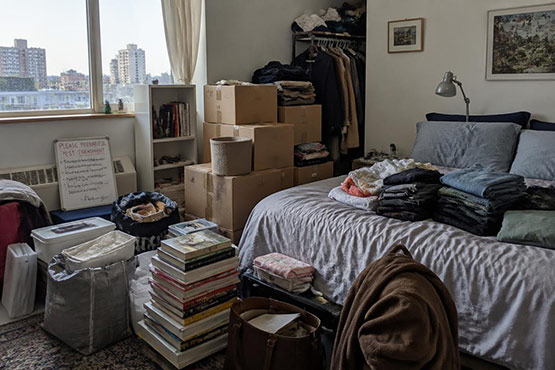
- Clothing, bedding, books, shoes and soft goods can usually stay in the room — the heat treats them where they sit
- Dressers and closets often stay loaded (we open drawers and doors so air moves through)
- Clutter is far less of a dealbreaker. It slows heat penetration, so we allow extra time and add airflow — but you don’t have to purge your home before we arrive
- You leave for the day and come back to a finished job
That last point matters more than people expect. For seniors, people with mobility limits, hoarding situations, and anyone who simply can’t strip an entire apartment in 48 hours, heat is often the only realistic path to getting treated at all.
What you still need to remove before heat: aerosol cans and lighters, pressurized containers, medications, cosmetics, candles and wax items, vinyl records, live plants and pets, anything heat-sensitive or electronics that you’re unsure about. We give you a short written list — it’s usually one or two grocery bags’ worth, not a moving day.
How do I know it’s actually bed bugs?
Before you pay for anything, confirm the ID. Look for:
- Small rust-coloured spots on sheets or the mattress seam (digested blood)
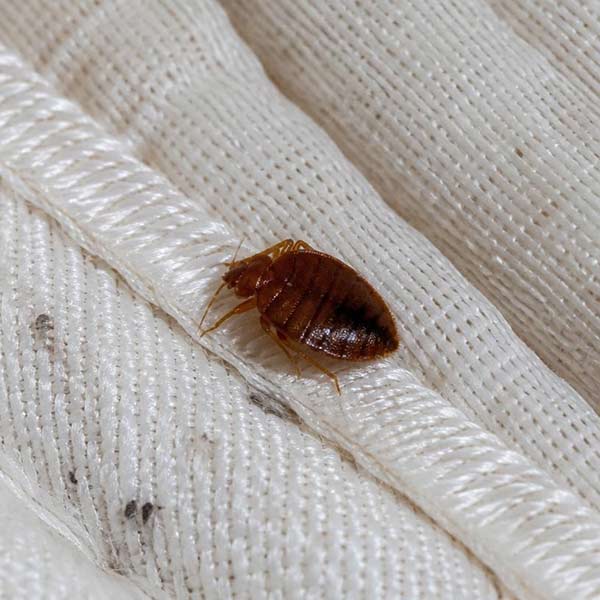
- Live bugs — flat, reddish-brown, about the size and shape of an apple seed
- Shed skins and pale eggs clustered along seams, in the bed frame joints, and behind the headboard
- Bites in lines or clusters on skin exposed while sleeping — though bite reactions vary wildly and about 30% of people don’t react at all
Bites alone are not a diagnosis. Fleas, mites, carpet beetle hairs and skin conditions all get mistaken for bed bugs. Catch a specimen in a clear container or take a sharp photo before you book.
Heat treatment vs. chemical: quick comparison
| Heat treatment | Chemical treatment | |
|---|---|---|
| Visits needed | Usually 1 | 2–3, spaced 2 weeks apart |
| Kills eggs | Yes | Usually not |
| Resistance risk | None | Real and increasing |
| Prep required | Light | Heavy (bag/launder everything) |
| Works in clutter | Yes, with extra time | Poorly |
| Residual protection | None on its own | Some |
| Time to resolution | Same day | 4–6 weeks |
Best practice for most infestations is heat plus a light residual application at entry points and baseboards — heat clears the existing population, the residual catches anything walking back in from a neighbouring unit.
What treatment day looks like
- Inspection and quote — we confirm the pest, map the spread, and give you a flat price.
- Short prep list — you remove the heat-sensitive items only.
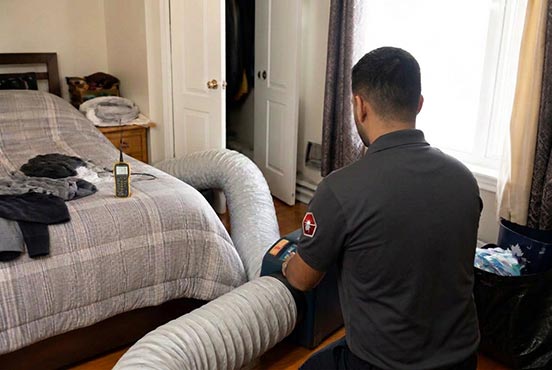
- Setup — heaters, ducting and circulation fans go in; sensors are placed at the coldest points.
- Ramp and hold — the space climbs to target temperature and holds for several hours while readings are logged.
- Cool down and inspect — we check harbourage sites, apply any residual, and log the results.
- Follow-up — a verification visit confirms zero activity. Our treatments carry a written guarantee.
You’re typically out of the home for 6–9 hours for a single-unit job.
Toronto specifics
Bed bug reports climb every September as students move in, families return from travel, and used furniture changes hands. In Toronto condos and apartments, the biggest risk factor is a shared wall — if a neighbouring unit is infested and untreated, re-introduction is likely, and your building’s property manager should be notified in writing. Single-family homes and townhouses usually trace infestations to travel, a hotel stay, or second-hand furniture.
If you rent in Ontario, treatment is your landlord’s responsibility under the Residential Tenancies Act. Report it in writing and keep a copy.
FAQ
How much does bed bug heat treatment cost in Toronto? Most single-room treatments fall in the $1,300–$1,600 range, with full-home jobs higher. Price depends on square footage, number of rooms and infestation severity. We quote a flat rate up front.
Is heat treatment worth the extra cost over spray? Usually yes. It’s one visit instead of three, it kills eggs, and it needs a fraction of the prep. Total cost and total disruption often come out close. However, if affordability is an issue, then you can ask about the regular chemical treatment – much lower cost; you will just need to follow a strict preparation list.
Will heat treatment damage my belongings? Not if it’s done properly. We provide a removal list for heat-sensitive items — aerosols, candles, medications, electronics you’re unsure about, plants and pets. Clothing, bedding, furniture and books are fine.
Does heat treatment kill bed bug eggs? Yes. Sustained temperatures of 50–56°C kill all life stages including eggs, which is why one visit is usually enough.
Do I have to wash all my clothes for heat treatment? No. That’s the main advantage over chemical treatment — soft goods can generally stay in the room and get treated in place.
How long does it take? Plan to be out of the home for roughly 6–9 hours for a single unit. Larger homes take longer.
Can heat treatment work if my place is cluttered? Yes. Clutter slows heat penetration, so we add time, sensors and airflow rather than asking you to clear the home first.
Get a straight price today
We’ll confirm what you’re dealing with, quote a flat rate, and get you booked — often for next-day service across Toronto and the GTA.
Call or text (647) 478-2128 for a free quote. Discreet, unmarked vehicles available.
Related Articles:
What Do Bed Bug Bites Look Like — And How to Check Your Bed for Bed Bugs