

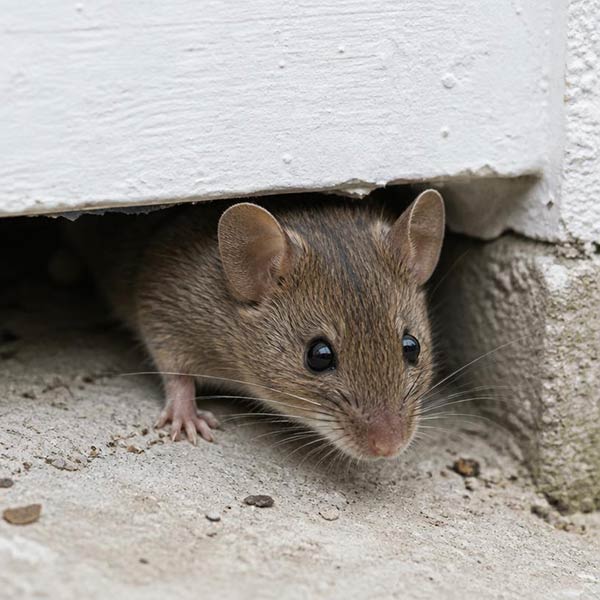
Every fall, our phones light up with the same call: “I heard scratching in the wall last night.” Mice are one of the most common pests we deal with across Toronto, the GTA, and up through Barrie — and they’re also one of the most preventable.
The difference between a one-time mouse problem and a yearly headache almost always comes down to one thing: mouse-proofing. Killing the mice already inside is the easy part. Keeping the next family out is what actually solves it.
Here’s how professional rodent control in Toronto works, what to seal, and one benefit most homeowners never think about — mouse-proofing your house also helps flea-proof it.
Why Mice Get Into Toronto Homes So Easily
A house mouse can slip through an opening the size of a dime — roughly 6 mm. Adult mice can flatten their bodies, climb rough brick, run along wiring, and chew soft materials to widen a gap that was almost big enough.
Toronto and Barrie housing stock makes it worse:
- Older homes with fieldstone or block foundations, settling cracks, and original wood sills
- Semis and townhouses with shared walls, where mice travel between units
- Basement apartments with utility penetrations, floor drains, and exterior stairwells
- New builds with unsealed weep holes, garage door corners, and rough plumbing gaps
Add cool nights in September and October and you’ve got the annual migration indoors — mice are looking for warmth, food, and a quiet nesting spot.
Signs You Have Mice in the House
Most people hear mice before they see them. Watch for:
- Droppings — small dark pellets under sinks, in drawers, along baseboards, inside pantry corners
- Shredded nesting material — paper, insulation, dryer lint, fabric tucked into corners or behind appliances
- Gnaw marks on food packaging, cardboard, baseboards, or plastic
- Scratching or scurrying in walls and ceilings, usually right after dark
- A musky ammonia smell in an enclosed space like a cabinet or closet
- Grease trails — dark smudges along walls where mice repeatedly travel
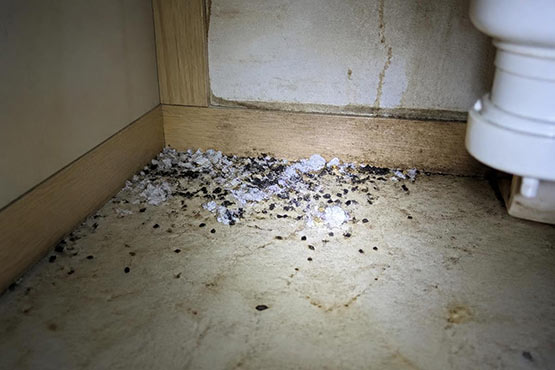
If you’re finding droppings in more than one room, you’re past the “single mouse” stage. Mice reproduce fast — a female can have 5 to 10 litters a year.
How to Mouse-Proof Your House
Mouse-proofing (also called rodent exclusion) is the physical work of sealing every opening a mouse can use. Here’s where we find entry points most often:
1. The foundation line
Walk your home’s perimeter slowly and look at the joint where siding or brick meets the foundation. Cracks, gaps behind stone veneer, and eroded mortar are prime entry points. Seal with mortar, concrete-grade sealant, or hardware cloth — not expanding foam alone, which mice chew straight through.
2. Pipe, wire, and vent penetrations
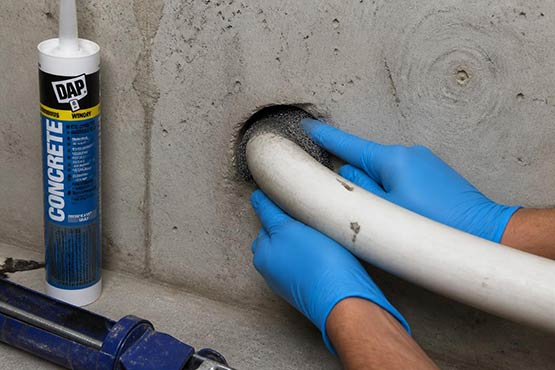
Water lines, gas lines, A/C lines, dryer vents, and electrical conduit almost always have a gap around them. Pack the opening with coarse stainless steel wool, then seal over it. Steel wool resists chewing in a way caulk and foam never will.
3. Garage doors and thresholds
The bottom corners of a garage door are the single most overlooked entry point in the GTA. Worn rubber seals leave triangular gaps at each end. Replace the bottom seal and add corner inserts.
4. Doors and windows
Any door you can see daylight under needs a new sweep. Check basement windows, window wells, and old wooden frames that have shrunk over time.
5. Weep holes and soffits
Brick weep holes should stay open for drainage but can be fitted with stainless mesh inserts. Check where soffits meet the roofline — mice climb better than most people expect.
6. Attached structures
Decks, porches, additions, and detached garages create sheltered runways. Screening the underside of a deck with hardware cloth removes a major harbourage area.
And inside the house
Exclusion keeps mice out; sanitation keeps them from staying. Store dry goods in glass or hard plastic, clean under and behind appliances, keep pet food sealed, empty kitchen garbage nightly, and stop feeding birds directly beside the house.
Why Mouse-Proofing Also Helps Flea-Proof Your Home
Here’s the part almost nobody connects.
Rodents carry fleas. Mice and rats are hosts for fleas, mites, and ticks, and when a rodent nests inside your wall void, subfloor, or attic, its parasites come along for the ride.
We’ve treated homes in Toronto with an active flea problem and no pets at all. In several of those cases, the source turned out to be a rodent population in the structure. The chain looks like this:
- Mice enter and nest in a wall void, basement, or attic
- Fleas breed in the nesting material
- The mice are killed, trapped, or move on
- The newly hostile fleas leave the nest looking for a new blood meal — and find people
That last step is why flea bites sometimes start right after a rodent problem gets handled. Removing the host without addressing the nest and the fleas can push them into living space.
Sealing your home properly breaks that chain before it starts:
- No rodent entry means no rodent nests inside the structure
- No nests means no flea breeding sites in your walls, insulation, or subfloor
- The same gaps that let in mice are the routes wildlife-borne parasites use
- Screening decks and crawlspaces keeps flea-carrying raccoons, skunks, and squirrels out of harbourage right against your foundation
Mouse-proofing is genuinely two treatments in one: rodent prevention and parasite prevention. If you’d like more detail on that side of things, see our guide on flea pest control and how fleas get into homes without pets.
Why DIY Rodent Control Usually Falls Short
Store-bought snap traps and bait catch some mice. They don’t solve infestations, and here’s why:
- You only find the obvious entry points. The ones behind the deck, above the soffit, or under the porch stay open.
- Bait placement matters. Loose bait in living areas is a real risk to children and pets, and poorly placed bait means mice die inside wall cavities.
- Sanitation gets skipped. Contaminated nesting material and droppings need proper cleanup, not a vacuum.
- No monitoring. Without follow-up you don’t know whether activity actually stopped.
How Swift-X Handles Rodent Control
Our approach is inspection first, then exclusion, then control:
- Full interior and exterior inspection — we map entry points, runways, and nesting areas, and note any signs of secondary pests like fleas or mites
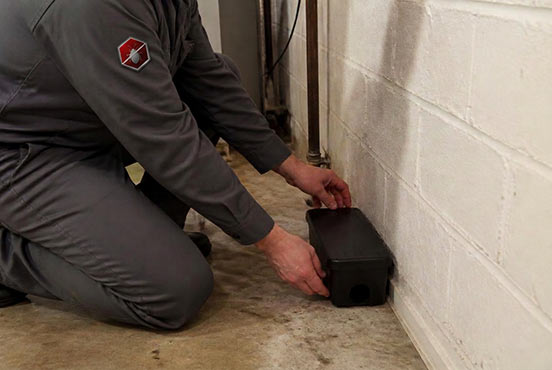
- Tamper-resistant bait stations and traps — placed in areas inaccessible to children and pets
- Exclusion work — sealing gaps with steel wool, mesh, and durable sealants so the problem doesn’t repeat
- Flea or mite treatment when needed — if rodent nesting has brought parasites into the structure
- Follow-up visits — to confirm activity has stopped and re-check the seal points
We service Toronto, the GTA, Barrie, and surrounding areas, and offer next-day appointments in most cases. Our technicians work discreetly — unmarked vehicles and plain uniforms — so your neighbours don’t need to know why we’re there.
Frequently Asked Questions
How small a hole can a mouse get through? About 6 mm — roughly the diameter of a dime. If you can fit a pencil into a gap, a mouse can likely use it.
Does one mouse mean an infestation? Not always, but mice rarely travel alone and they breed quickly. Finding droppings in multiple rooms usually means an established population.
Can mice really give my house fleas? Yes. Rodents host fleas, and nesting inside a wall void gives fleas a protected place to breed. We’ve traced flea complaints in pet-free Toronto homes back to rodent activity.
Is steel wool better than expanding foam? For mouse-proofing, yes. Mice chew through foam and caulk. Coarse stainless steel wool packed into a gap and sealed over is far more durable.
When is the best time for mouse-proofing? Late summer through fall is ideal — before mice come in for the winter. That said, exclusion work is worth doing any time of year.
Get Ahead of Rodent Season
If you’re hearing scratching in the walls or finding droppings in the kitchen, don’t wait for it to get worse — and don’t just set traps and hope. Sealing your home properly is what ends the cycle, and it protects you from the fleas and mites that ride in with rodents.
Call or text Swift-X Pest Control for a rodent inspection and mouse-proofing quote in Toronto, the GTA, or Barrie. We’ll show you exactly where they’re getting in.
Related Reading:
Flea Pest Control in Toronto & Barrie: How Fleas Get Into Homes Without Pets
Mice in Walls: Signs, Sounds & How to Get Rid of Them | GTA